Klow (Melanotan I) 10mg – Afamelanotide for Selective Photoprotection & Melanogenesis Research
Our pharmaceutical-grade Klow delivers Melanotan I (Afamelanotide), the linear 13-amino-acid analog of alpha-melanocyte stimulating hormone (α-MSH) that revolutionized photoprotection research through its exquisite selectivity for the melanocortin-1 receptor (MC1R). Unlike its cyclic counterpart Glow (Melanotan II), which activates multiple melanocortin receptor subtypes, Afamelanotide specifically targets MC1R on melanocytes, stimulating eumelanin production without the off-target central nervous system effects observed with non-selective analogs. This 10mg lyophilized preparation provides researchers with the identical structural sequence (Ac-Ser-Tyr-Ser-Nle-Glu-His-D-Phe-Arg-Trp-Gly-Lys-Pro-Val-NH₂) that demonstrated clinical efficacy in erythropoietic protoporphyria (EPP) trials, offering a refined tool for investigating UV-independent photoprotection, vitiligo repigmentation, and melanocortin-specific signaling pathways.
Melanotan I represents the first-generation synthetic melanotropin, characterized by four critical modifications to the native α-MSH sequence: N-terminal acetylation, substitution of Met⁴ with Norleucine (Nle) for oxidation resistance, D-Phe⁷ for enhanced melanocortin receptor binding affinity, and C-terminal valine amide for proteolytic stability. These alterations extend half-life from minutes (native α-MSH) to approximately 30-60 minutes while preserving the linear conformation essential for MC1R selectivity. For dermatology researchers, photobiology laboratories, and investigators studying the MC1R signaling cascade distinct from appetite or sexual behavior modulation, MT-I provides the pharmacological precision that Glow (MT-II) cannot achieve due to its broader receptor promiscuity.
When reconstituted with bacteriostatic water, this selective melanocortin agonist enables investigation into pure melanogenic stimulation without confounding variables from MC3R (energy homeostasis), MC4R (appetite/sexual function), or MC5R (sebaceous/exocrine) activation, making it the gold standard for photoprotection research requiring mechanistic clarity.
Structural Biochemistry & MC1R Selectivity
Melanotan I (Afamelanotide) maintains a linear tridecapeptide structure that contrasts sharply with the cyclic lactam bridge of Melanotan II. This extended N-terminal region (residues 1-6) provides the structural determinants for MC1R selectivity, while the C-terminal tripeptide (Lys-Pro-Val-NH₂) ensures resistance to carboxypeptidase degradation. The D-phenylalanine at position 7 creates a β-turn conformation that optimizes fit within the MC1R transmembrane binding pocket without the conformational constraints imposed by MT-II’s cyclic structure.
Receptor Pharmacology:
MC1R selectivity differentiates Afamelanotide from non-selective analogs. While Glow (MT-II) binds MC1R, MC3R, MC4R, and MC5R with high affinity—producing sexual arousal, appetite suppression, and autonomic effects—MT-I demonstrates >100-fold selectivity for MC1R versus other subtypes. This specificity proves crucial for research isolating cutaneous melanogenesis from central melanocortin effects, allowing investigators to attribute observed photoprotection strictly to epidermal eumelanin induction rather than behavioral modifications or metabolic changes.
Eumelanin vs. Pheomelanin Modulation:
Research utilizing Melanotan I demonstrates preferential stimulation of eumelanin (brown/black, photoprotective) over pheomelanin (red/yellow, photosensitizing) synthesis. This shift in melanin type correlates with reduced reactive oxygen species generation upon UV exposure, providing mechanistic insights into how MC1R signaling influences the pheomelanin-to-eumelanin switch at the enzymatic level (tyrosinase vs. TYRP1/DCT ratios).
Research Applications & Therapeutic Models
Erythropoietic Protoporphyria (EPP) Research:
The primary clinical correlate for Afamelanotide research involves EPP, a genetic disorder causing severe photosensitivity due to protoporphyrin IX accumulation. MT-I stimulates melanin density sufficient to attenuate the 400-410nm Soret band light that triggers porphyrin excitation, providing a pharmacological model for investigating whether pharmacologic tanning can substitute for behavioral photoprotection in genetic photodermatoses. Research protocols examine minimal erythema dose (MED) extension, quality of life metrics, and protoporphyrin-induced hepatotoxicity mitigation.
Vitiligo Repigmentation:
Unlike BPC-157 which promotes wound healing through angiogenesis, Melanotan I addresses vitiligo through melanocyte stimulation from follicular reservoirs. Research investigates whether MC1R activation can drive melanocyte migration into depigmented epidermis without the UV exposure typically required to trigger residual melanocyte activity. Studies focus on segmental versus generalized vitiligo subtypes, examining whether MT-I can overcome autoimmune melanocyte destruction in active disease versus stable disease repigmentation.
Solar Urticaria & Polymorphous Light Eruption (PMLE):
For idiopathic photodermatoses, Afamelanotide research explores whether enhanced baseline melanin density can prevent mast cell degranulation (solar urticaria) or T-cell-mediated photodamage responses (PMLE). These studies require careful distinction between photoprotection (preventing UV damage) and photo-hardening (immunological adaptation), with MT-I specifically addressing the former through physical UV filtration by melanin.
Melanoma Risk Assessment Research:
Paradoxically, while Melanotan I stimulates melanocytes, it may reduce UV-induced DNA damage in keratinocytes through enhanced melanin shielding. Research investigates whether pharmacologic tanning reduces thymine dimer formation and p53 mutations compared to natural tanning, potentially offering insights into whether controlled melanogenesis can be chemoprotective despite concerns about melanocyte proliferation.
Product Specifications & Analytical Verification
- Chemical Name: Afamelanotide; Melanotan I; [Nle⁴, D-Phe⁷]-α-MSH
- Sequence: Ac-Ser-Tyr-Ser-Nle-Glu-His-D-Phe-Arg-Trp-Gly-Lys-Pro-Val-NH₂
- Molecular Formula: C₇₈H₁₁₁N₂₁O₁₉
- Molecular Weight: 1,646.85 g/mol
- Total Content: 10mg per vial (lyophilized powder)
- Structure: Linear tridecapeptide (13 amino acids)
- Purity: ≥99% (HPLC verified)
- Counter-ion: Acetate (pharmaceutical grade)
- Appearance: White to off-white fluffy lyophilized powder
- Solubility: Soluble in aqueous solutions (water, saline, bacteriostatic water)
- Storage: -20°C stable (lyophilized), 2-8°C after reconstitution
- Reconstituted Stability: 14 days at 2-8°C when prepared with preservatives
Quality Control:
Each batch analyzed for correct molecular weight (1,647.6 [M+H]+ by MS) and absence of oxidation products (particularly methionine sulfoxide, though Nle substitution prevents this). Bioactivity verified via melanin synthesis assays in B16-F10 melanoma cells or normal human melanocytes, ensuring EC₅₀ <10 nM for tyrosinase upregulation.
Reconstitution & Administration Protocols
Preparation Guidelines:
Reconstitute Melanotan I 10mg with 2ml of bacteriostatic water to create a 5mg/ml stock solution. Unlike GHK-Cu which requires acidic conditions for copper complex stability, Afamelanotide dissolves readily in neutral pH aqueous solutions. Gentle inversion mixing suffices; avoid vigorous vortexing which may generate foam and cause oxidative stress on the tryptophan residue at position 9.
Research Dosing Parameters:
Typical research concentrations range from 0.025-0.16 mg/kg body weight in clinical translation models, administered via subcutaneous injection. For cutaneous research, dosing every 2-3 days maintains melanin synthesis without receptor desensitization, as MC1R does not downregulate as rapidly as other melanocortin receptors. Photoprotection studies typically require 7-10 days of loading before UV challenge protocols to allow melanosome transfer to keratinocytes.
Photoprotection Assessment:
Research endpoints include minimal erythema dose (MED) determination, persistent pigment darkening (PPD) measurement, and spectrophotometric melanin index quantification. Unlike Glow (MT-II) research which must control for sexual or appetite side effects, MT-I protocols can focus purely on cutaneous endpoints without behavioral confounders.
Comparative Analysis: Melanotan I vs. Melanotan II
Structural Distinctions:
Klow (MT-I) maintains a linear 13-amino-acid backbone, while Glow (MT-II) forms a cyclic 7-amino-acid lactam structure. This size difference (1,647 Da vs. 1,024 Da) affects clearance rates, with MT-I demonstrating longer duration of action due to reduced renal filtration, while MT-II shows higher receptor affinity but shorter half-life due to its compact structure.
Receptor Selectivity:
The critical research distinction lies in receptor specificity. Glow (MT-II) activates MC1R, MC3R, MC4R, and MC5R, making it suitable for investigating central melanocortin effects (appetite, libido, energy expenditure) alongside pigmentation. Klow (MT-I) restricts activity to MC1R, providing pure dermatological research data without central nervous system variables. For studies requiring isolated cutaneous effects, MT-I is the superior research tool; for metabolic or behavioral melanocortin research, MT-II remains appropriate.
Side Effect Profile:
Research utilizing Melanotan I reports significantly reduced nausea, facial flushing, and sexual arousal compared to [MT-II](https://specialkzone.com/product/melanotan-2/), as these effects are mediated by MC3R/MC4R activation absent in the selective analog. This improved tolerability allows for higher dosing in photoprotection research without central side effect limitations.
Photoprotection Efficacy:
Both peptides stimulate melanogenesis, but Afamelanotide produces more consistent eumelanin-dominant pigmentation with less freckling or uneven melanin distribution observed with non-selective analogs. Research suggests this relates to MC1R-specific signaling versus off-target effects on melanocyte proliferation patterns.
Safety Considerations & Research Limitations
Melanocyte Stimulation Concerns:
While Melanotan I stimulates melanin production, research must monitor for melanocytic nevus darkening or atypical mole changes. Unlike BPC-157 which influences wound healing without cellular transformation risks, melanocortin peptides activate melanocyte proliferation pathways that require dermatological monitoring in long-term studies.
Cardiovascular Hemodynamics:
MT-I may cause mild blood pressure reductions through nitric oxide-mediated vasodilation, distinct from the pressor effects sometimes observed with other peptides. Research protocols should include cardiovascular monitoring, particularly when investigating systemic administration in models with cardiovascular vulnerabilities.
Immunogenicity:
As a foreign peptide, Afamelanotide may elicit antibody responses in long-term research protocols, potentially reducing efficacy over time. Researchers should monitor for tachyphylaxis (reduced melanogenic response with repeated dosing) which may indicate immune clearance rather than receptor desensitization.
Frequently Asked Research Questions
What is the difference between Afamelanotide and Melanotan I?
They are identical—Afamelanotide is the International Nonproprietary Name (INN) for the compound originally designated Melanotan I or [Nle⁴, D-Phe⁷]-α-MSH. Both refer to the same 13-amino-acid linear peptide sequence.
Why choose Melanotan I over Melanotan II for photoprotection research?
MT-I offers MC1R selectivity, eliminating central nervous system effects (appetite suppression, sexual arousal, nausea) mediated by MC3R/MC4R activation seen with MT-II. This allows researchers to attribute photoprotection strictly to melanin induction rather than behavioral sun avoidance or metabolic changes.
How long until melanin production is visible in research models?
Visible tanning typically occurs within 7-14 days of initiation, with maximal photoprotection (MED doubling) requiring 2-3 weeks of consistent administration to allow melanosome maturation and transfer to epidermal keratinocytes.
Can Melanotan I be combined with UV exposure research?
Yes, combination protocols investigate whether MT-I pre-treatment reduces UV-induced DNA damage markers (8-OHdG, thymine dimers) compared to UV exposure alone. However, researchers must distinguish between peptide-induced melanin protection and any direct DNA repair mechanisms.
Is this suitable for vitiligo research versus cosmetic tanning?
Afamelanotide is specifically valuable for vitiligo research investigating follicular melanocyte activation and migration into depigmented patches, whereas [MT-II](https://specialkzone.com/product/melanotan-2/) research often focuses on generalized melanogenesis. The linear structure of MT-I may offer different tissue distribution patterns relevant to localized repigmentation.
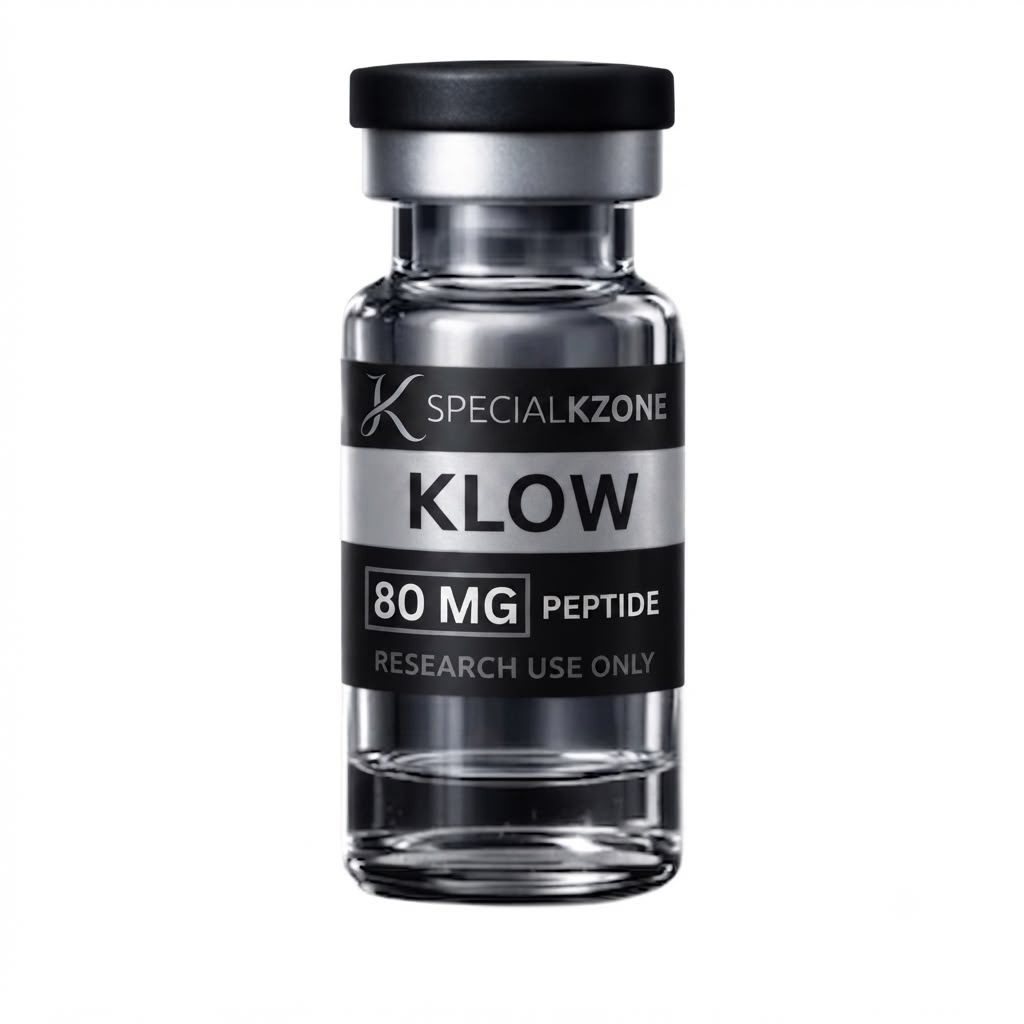
KLOW is a research compound in lyophilized powder form for laboratory research, testing, and analytical applications.
-
Compound: KLOW
-
Quantity: 80 mg
-
Purity: ≥99% (HPLC Certified)
-
Form: Lyophilized powder
-
Appearance: White to off-white powder
-
Solubility: Soluble in laboratory-grade sterile water
-
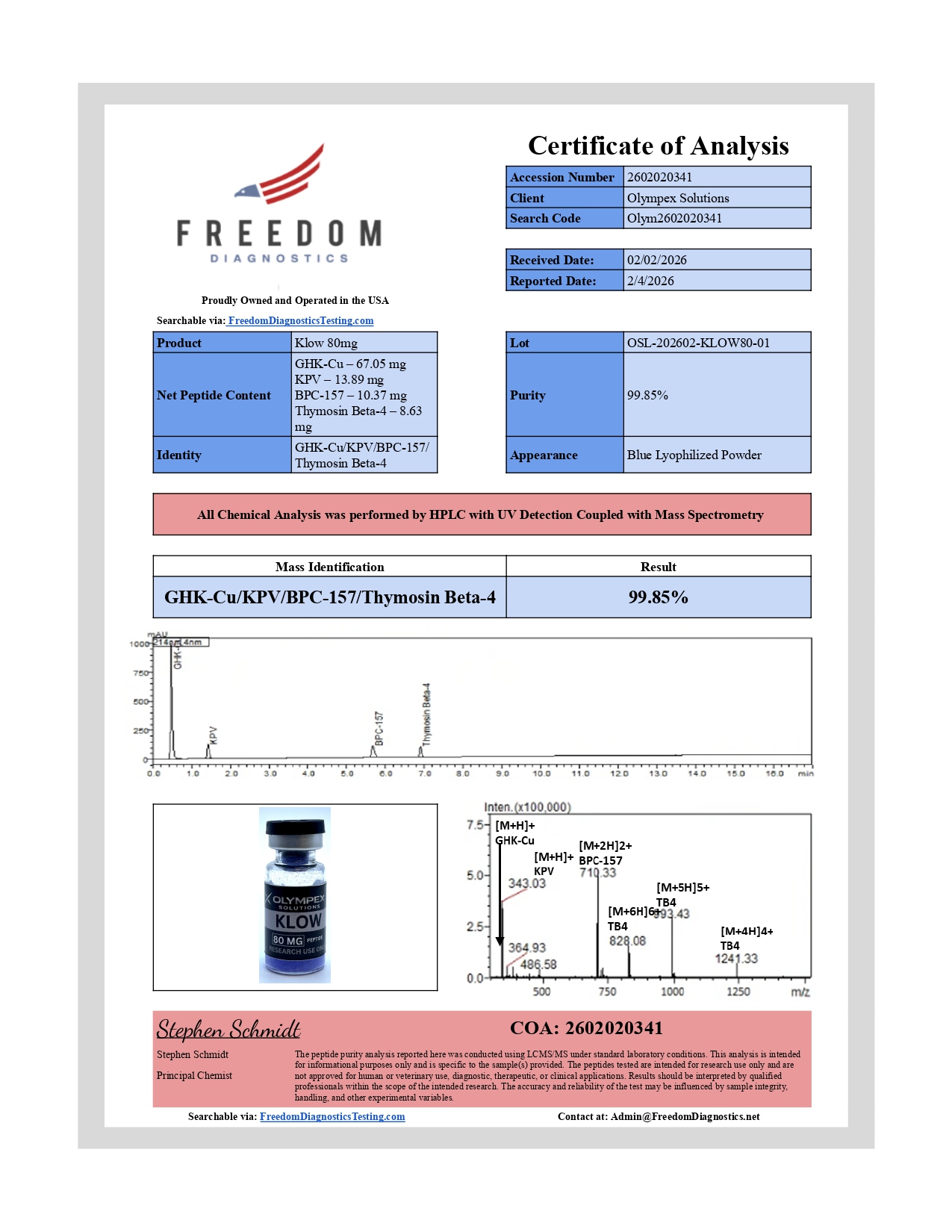
COA: Included in product image gallery
Reviews
There are no reviews yet.