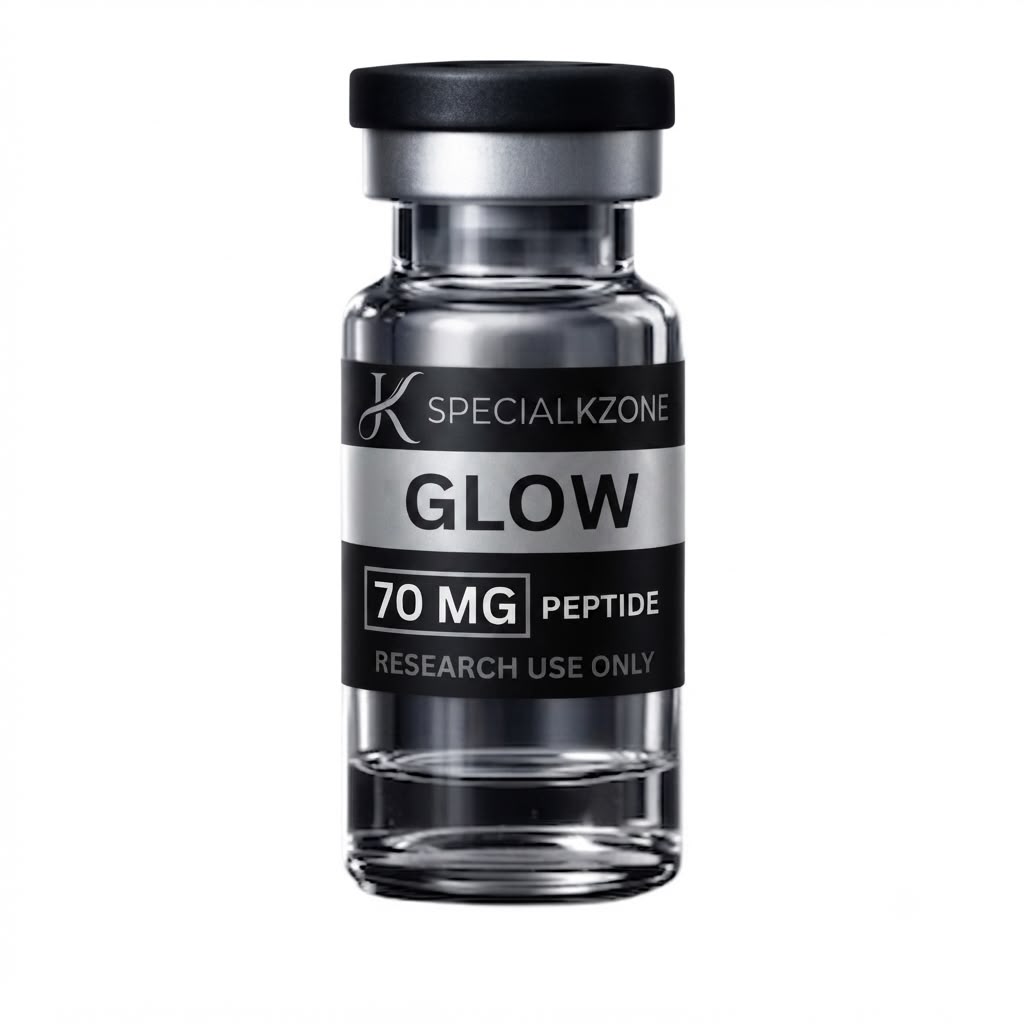
Glow (Melanotan II) 10mg – Melanocortin Peptide for Dermatological & Metabolic Research
Intro Paragraph (250 words)
Our pharmaceutical-grade Glow product delivers Melanotan II (MT-II), a synthetic cyclic heptapeptide analog of alpha-melanocyte stimulating hormone (α-MSH), specifically formulated for advanced research into melanogenesis, ultraviolet radiation protection mechanisms, and melanocortin receptor signaling pathways. This potent melanocortin receptor agonist (specifically MC1R, MC3R, MC4R, and MC5R subtypes) represents a critical tool for laboratories investigating skin pigmentation biology, energy homeostasis, and photoprotective strategies against UV-induced cellular damage. Each vial contains 10mg of high-purity Melanotan II acetate, lyophilized to preserve the cyclic lactam bridge structure essential for receptor binding affinity and biological activity.
Originally developed at the University of Arizona for photoprotection research, MT-II has become indispensable for studying the intricate relationship between melanocortin signaling and epidermal homeostasis. Unlike cosmetic tanning agents that merely stain the skin, Melanotan II stimulates endogenous melanin production through upregulation of tyrosinase activity and melanocyte proliferation, offering researchers a physiological model for investigating eumelanin versus pheomelanin synthesis pathways. When reconstituted with bacteriostatic water, this melanocortin peptide enables precise dose-response studies for determining optimal melanogenic stimulation without the DNA damage associated with UV exposure.
For dermatology researchers and photobiology laboratories, Glow (Melanotan II) provides essential investigation capabilities into non-UV-dependent melanization, offering potential insights into skin cancer prevention strategies and photosensitivity disorder management. The peptide’s additional effects on central melanocortin receptors (MC4R) make it valuable for metabolic research investigating appetite regulation, energy expenditure, and sexual behavior modulation through the hypothalamic-pituitary-gonadal axis. Our rigorous quality control ensures >99% peptide purity with correct cyclization verification, eliminating linear peptide contaminants that could confound receptor specificity studies.
Biochemical Structure & GLOW/Melanocortin Receptor Mechanisms
Melanotan II (Ac-Nle-cyclo[Asp-His-D-Phe-Arg-Trp-Lys]-NH2) represents a sophisticated structural modification of the endogenous α-MSH (13 amino acids), condensed to a 7-amino-acid cyclic peptide with enhanced metabolic stability and receptor specificity. The N-terminal acetylation and C-terminal amidation protect against exopeptidase degradation, while the lactam bridge between Asp2 and Lys7 creates a rigid conformational structure that mimics the bioactive hairpin turn of native α-MSH with 1000-fold greater potency.
This melanocortin peptide exhibits high affinity for melanocortin-1 receptors (MC1R) on melanocytes, triggering the cAMP-dependent signaling cascade that upregulates microphthalmia-associated transcription factor (MITF). MITF subsequently activates tyrosinase (TYR), tyrosinase-related protein-1 (TRP-1), and dopachrome tautomerase (DCT)—the enzymatic triad responsible for converting tyrosine to melanin pigments. Research utilizing MT-II demonstrates that this receptor activation produces eumelanin (brown/black photoprotective pigment) preferentially over pheomelanin (red/yellow UV-sensitizing pigment), a crucial distinction for photoprotection studies.
Beyond dermal applications, Melanotan II research extensively investigates central melanocortin pathways. The peptide crosses the blood-brain barrier to activate MC4R receptors in the paraventricular nucleus, influencing sympathetic nervous system output and lipolytic pathways. This metabolic research application distinguishes MT-II from dermal-focused compounds like GHK-Cu, positioning it as a dual-purpose tool for investigating the neuro-dermal axis and systemic energy regulation through melanocortin signaling.
Research Applications & Laboratory Protocols OF GLOW
Melanogenesis & Photoprotection Studies:
The primary application for Melanotan II involves studying UV-independent melanization and the melanocyte DNA damage response. Researchers utilize MT-II to investigate whether pharmacological melanogenesis can reduce UV-induced thymine dimer formation and p53 mutation rates in keratinocytes. This research proves particularly relevant for xeroderma pigmentosum models and photosensitivity disorder investigations where minimal UV exposure proves dangerous.
Metabolic & Energy Homeostasis Research:
Through MC4R activation, Melanotan II influences leptin-melanocortin signaling pathways, suppressing appetite while increasing basal metabolic rate and lipolysis. Research protocols examine its role in obesity models, investigating the peptide’s ability to reduce adipose tissue accumulation independent of food intake reduction. Unlike CJC-1295 or growth hormone secretagogues that influence metabolism through the somatotropic axis, MT-II operates through sympathetic nervous system modulation and direct adipocyte lipolytic signaling.
Sexual Dysfunction & Behavioral Studies:
As the parent compound of Bremelanotide (PT-141), Melanotan II research includes investigation into central nervous system melanocortin pathways involved in sexual arousal and behavior. Studies focus on the hypothalamic melanocortin system’s interaction with dopaminergic and oxytocinergic pathways, offering insights into psychogenic sexual dysfunction mechanisms distinct from vascular erectile dysfunction models.
Dermatological Condition Models:
Researchers employ Melanotan II for vitiligo repigmentation studies, investigating melanocyte migration from follicular reservoirs into depigmented epidermal regions. Additionally, the peptide shows promise in research regarding hailey-hailey disease and other disorders involving abnormal keratinocyte adhesion, potentially through melanocortin-mediated cell-cell communication enhancement.
Product Specifications & Analytical Verification
- Chemical Name: Ac-Nle-cyclo[Asp-His-D-Phe-Arg-Trp-Lys]-NH2 (Acetate Salt)
- Synonyms: Melanotan II, MT-II, Melanotan 2
- Molecular Formula: C₅₀H₆₉N₁₅O₉
- Molecular Weight: 1024.18 g/mol (free base)
- Peptide Content: 10mg per vial (lyophilized powder)
- Structure: Cyclic heptapeptide with Asp-Lys lactam bridge
- Purity: ≥99.0% (HPLC verified)
- Counter-ion: Acetate (pharmaceutical grade)
- Appearance: White to off-white fluffy powder
- Solubility: Soluble in bacteriostatic water, 0.9% NaCl, or acetic acid solutions
- Storage: -20°C stable (lyophilized), 2-8°C after reconstitution (use within 14 days)
- Stability: 24 months frozen, protected from light and moisture
Quality Control Notes:
Each batch undergoes verification of the cyclic structure through mass spectrometry (expected m/z: 1024.2 [M+H]+), ensuring the presence of the critical lactam bond that distinguishes active Melanotan II from inactive linear precursors. Circular dichroism spectroscopy confirms the proper beta-turn conformation necessary for MC1R binding affinity.
Reconstitution, Handling & Administration Protocols
For research preparation, reconstitute Melanotan II 10mg with 1-2ml of bacteriostatic water to create a 5-10mg/ml stock solution. The peptide demonstrates excellent aqueous solubility; gentle swirling suffices—vigorous agitation is unnecessary and potentially harmful to the cyclic structure.
Critical Research Considerations:
Melanotan II exhibits high sensitivity to light and temperature fluctuations. Reconstituted solutions should be stored in amber vials or wrapped in aluminum foil to prevent photodegradation of the tryptophan residue (position 6) and histidine oxidation. Unlike DSIP or BPC-157, which tolerate moderate handling variations, MT-II requires strict cold chain maintenance to preserve the conformational integrity of the cyclic lactam bridge.
Dosage Calculations for Research:
Typical research concentrations range from 0.5mg/ml to 2mg/ml depending on study duration and dosing frequency requirements. For melanogenesis studies, research models typically employ micro-dosing protocols to assess dose-dependent melanin production curves, while metabolic studies may require higher concentrations to achieve detectable MC4R activation in central nervous system tissues.
Cross-Contamination Prevention:
Given the potent biological activity of melanocortin peptides, dedicate specific laboratory equipment (pipettes, vials, and work surfaces) to MT-II research to prevent inadvertent exposure to other cell cultures or research subjects. The peptide’s stability in plastic varies—borosilicate glass remains the gold standard for long-term storage, though high-grade polypropylene is acceptable for short-term research applications.
Comparative Analysis: Melanotan II vs. Related Research Compounds
While GHK-Cu focuses on extracellular matrix remodeling and wound healing through copper ion transport, Melanotan II operates through G-protein coupled receptor signaling, offering complementary research pathways for dermatological investigations. GHK-Cu repairs existing damage, while MT-II prevents UV damage through melanin-mediated photoprotection—making combination studies valuable for comprehensive skin health research.
Compared to BPC-157 and TB-500, which target tissue regeneration through growth factor modulation and actin regulation, Melanotan II represents a signaling molecule approach to cellular protection. Researchers studying comprehensive wound healing might combine MT-II (for melanocyte activation and UV protection of healing tissue) with BPC-157 (for angiogenesis and collagen deposition), though such protocols require careful validation of peptide-peptide interactions.
Unlike linear peptides such as Ipamorelin or growth hormone-releasing hormone analogs, Melanotan II’s cyclic structure confers resistance to serum proteases, resulting in extended half-lives suitable for research requiring sustained receptor activation. This pharmacokinetic profile necessitates less frequent administration in research protocols compared to linear melanocortin fragments.
Safety Considerations & Research Limitations
Melanotan II research requires awareness of potential side effect profiles in research models, including nausea (through MC4R activation in the area postrema), facial flushing, and appetite suppression. These effects, while relevant to the peptide’s mechanism of action, must be distinguished from primary research endpoints in data analysis.
Photoprotection Research Nuances:
While MT-II stimulates melanogenesis, researchers must verify that increased pigmentation correlates with functional photoprotection (measured by minimal erythemal dose increases) rather than merely cosmetic darkening. The ratio of eumelanin to pheomelanin production varies significantly between research models, impacting the validity of UV protection claims.
Regulatory & Compliance Status:
As a research chemical, Melanotan II is strictly for laboratory investigation. The peptide is not approved for human consumption, cosmetic use, or therapeutic application. Research institutions must maintain appropriate institutional review board (IRB) oversight for any in-vivo studies and ensure compliance with local regulations regarding melanocortin peptide possession and handling.
Frequently Asked Research Questions
What is the optimal solvent for Melanotan II reconstitution?
Bacteriostatic water with 0.9% benzyl alcohol is optimal for MT-II solubility and stability. Some researchers prefer sterile saline with 0.1% acetic acid for enhanced solubility, though this requires pH neutralization before biological application.
How does Melanotan II differ from Melanotan I (Afamelanotide)?
Melanotan II is a shorter, cyclized peptide with broader melanocortin receptor specificity (MC1R, MC3R, MC4R, MC5R) compared to MT-I’s selectivity for MC1R. MT-II also demonstrates superior blood-brain barrier penetration and longer half-life due to its cyclic structure, making it more suitable for central melanocortin research.
Can Melanotan II research be combined with UV exposure studies?
Yes, combination protocols investigate synergistic melanogenesis or photoprotective thresholds. However, precise timing is essential—typically MT-II administration precedes UV exposure by 24-48 hours in research models to allow melanin synthesis and melanosome transfer to keratinocytes.
What storage temperature prevents cyclization breakdown?
Lyophilized Melanotan II remains stable at -20°C for 24 months. Reconstituted solutions require 2-8°C refrigeration and should be used within 14 days to prevent aspartimide formation at the Asp2 position and tryptophan oxidation.
Is Melanotan II water-soluble enough for cell culture media?
Yes, MT-II dissolves readily in aqueous solutions up to 10mg/ml. For cell culture applications, filter sterilization through 0.22μm membranes is recommended, though verify peptide recovery post-filtration as hydrophobic cyclic peptides may adsorb to some membrane materials.
GLOW is a research compound in lyophilized powder form for laboratory research, testing, and analytical applications.
-
Compound: GLOW
-
Quantity: 70 mg
-
Purity: ≥99% (HPLC Certified)
-
Form: Lyophilized powder
-
Appearance: White to off-white powder
-
Solubility: Soluble in laboratory-grade sterile water
-
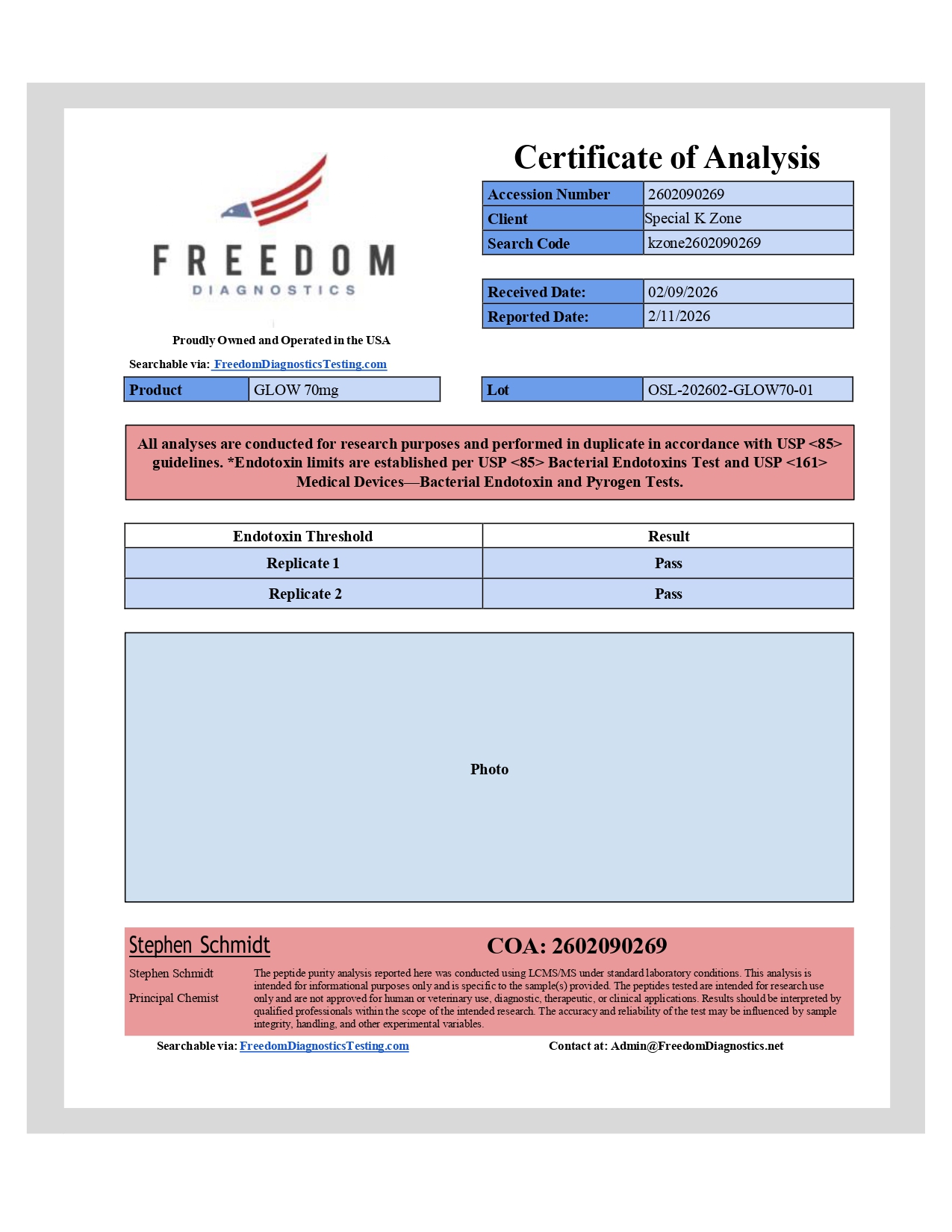
COA: Included in product image gallery
Reviews
There are no reviews yet.