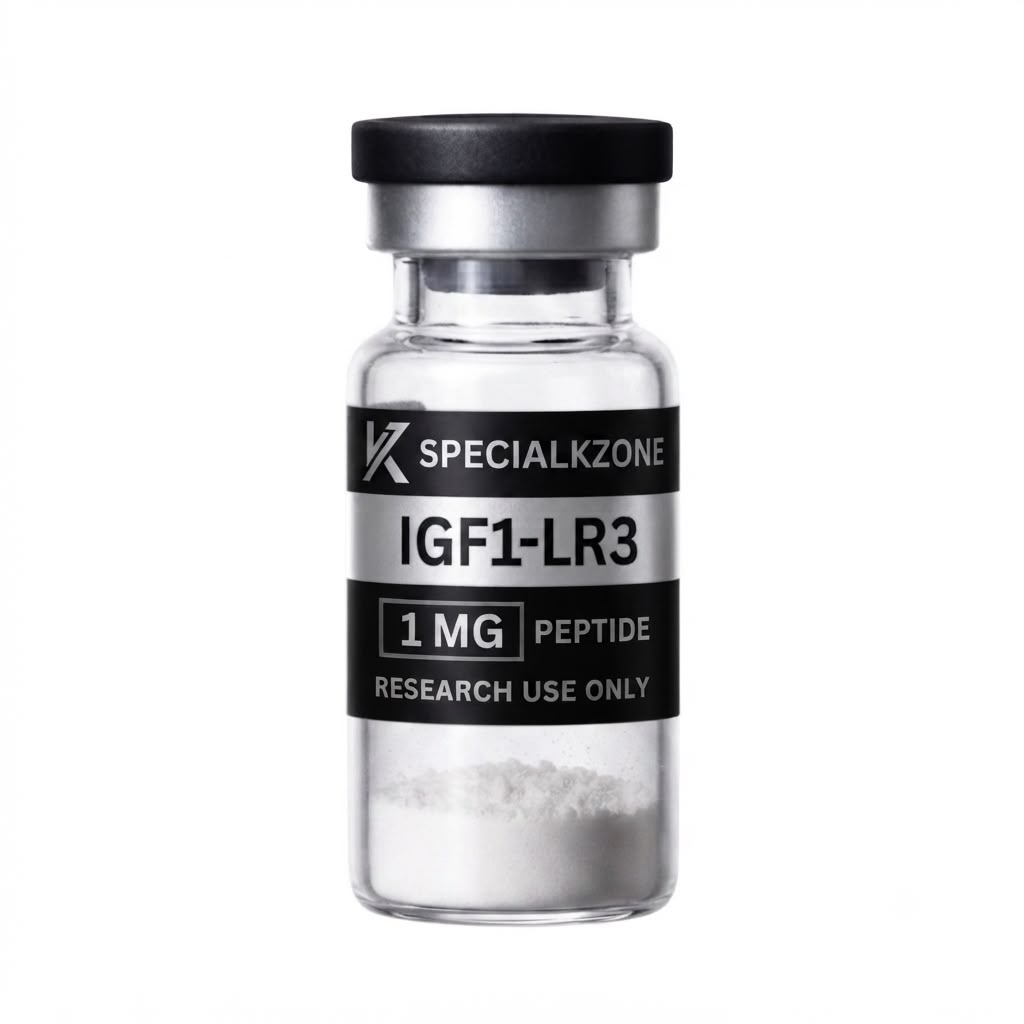
IGF1-LR3 1mg – Long R3 Insulin-Like Growth Factor for Anabolic & Recovery Research
Our pharmaceutical-grade IGF-1 LR3 (Insulin-Like Growth Factor-1 Long R3) represents the most potent research-grade analog of endogenous IGF-1 available for laboratory investigation, delivering a 1mg vial of this 83-amino-acid peptide engineered for extended biological activity and reduced binding protein interference. Unlike native IGF-1, which exhibits a circulating half-life of mere minutes due to rapid sequestration by IGF-binding proteins (IGFBPs) and receptor internalization, IGF1- LR3 incorporates a 13-amino-acid N-terminal extension and a critical Arginine substitution at position 3 (hence “Long R3”). These structural modifications reduce affinity for IGFBPs by approximately 1,000-fold while maintaining full agonist activity at the IGF-1 receptor (IGF1R), resulting in sustained tissue exposure and amplified mitogenic signaling in research models investigating muscle protein synthesis, cellular proliferation, and tissue regeneration.
This recombinant peptide serves as an essential tool for studying the IGF-1/PI3K/Akt/mTOR pathway—the central signaling cascade governing cellular hypertrophy, anti-apoptotic protection, and metabolic regulation. For researchers examining muscle atrophy reversal in cachexia models, wound healing acceleration beyond standard growth factors, or the metabolic requirements of cellular expansion, IGF1-LR3 provides consistent, dose-dependent stimulation of fibroblast, myoblast, and osteoblast proliferation without the pulsatile limitations of growth hormone secretagogue research compounds like CJC-1295/Ipamorelin.
When reconstituted with bacteriostatic water, this lyophilized preparation enables precise investigation into local tissue remodeling versus systemic metabolic effects, distinguishing it from structural repair peptides like BPC-157 through its direct activation of anabolic signaling rather than indirect angiogenic stimulation. The extended half-life (20-30 hours vs. 20 minutes for native IGF-1) allows for sustained research protocols examining chronic cellular adaptation rather than acute transient responses.
Structural Engineering & Mechanistic Advantages
IGF-1 LR3 (full sequence: MFPAMPLSSL FVNGPRTLCG AELVDALQFV CGDRGFYFNK PTGYGSSSRR APQTGIVDEC CFRSCDLRRL EMYCAPLKPA KSA) represents a sophisticated bioengineering achievement extending the native 70-amino-acid IGF-1 sequence with 13 additional residues at the N-terminus (derived from the E-peptide of pro-IGF-1) and substituting Glutamic Acid at position 3 with Arginine. This Arg³ mutation is critical—it disrupts the binding site for IGFBPs while preserving the IGF1R binding interface, effectively “hiding” the peptide from circulating binding proteins that normally limit bioavailability.
Reduced IGFBP Affinity:
In standard serum environments, >99% of endogenous IGF-1 remains bound to IGFBPs 1-6 and ALS (Acid-Labile Subunit), rendering it unavailable for receptor activation. IGF-1 LR3 circumvents this regulatory constraint, achieving free fractions 100-fold higher than native IGF-1. This property proves invaluable for in-vitro cell culture research where serum binding proteins would otherwise quench experimental responses, and for in-vivo studies investigating tissue-specific anabolic effects without systemic feedback inhibition.
Extended Half-Life:
The N-terminal extension protects against N-terminal degradation by proteases while reducing renal clearance due to increased molecular weight (~9.1 kDa vs. 7.6 kDa). This pharmacokinetic profile allows researchers to maintain sustained supraphysiological signaling through the IGF1R/IRS-1/PI3K pathway, essential for studying chronic adaptations in muscle fiber hypertrophy, satellite cell activation, and bone matrix deposition.
Receptor Specificity:
Despite modifications, IGF-1 LR3 maintains high affinity for the IGF-1 receptor (Kd ~0.1 nM) while showing reduced cross-reactivity with the insulin receptor, minimizing confounding metabolic effects in research protocols focused specifically on IGF-1-mediated mitogenesis versus metabolic regulation.
Research Applications & Laboratory Models
Muscle Hypertrophy & Atrophy Research:
The primary application for IGF-1 LR3 involves investigation of skeletal muscle protein balance. Research protocols examine myoblast proliferation (satellite cell activation), myonuclear accretion, and inhibition of the ubiquitin-proteasome pathway (MuRF1/Atrogin-1 suppression). Unlike CJC-1295, which stimulates endogenous GH/IGF-1 release indirectly, IGF-1 LR3 provides direct receptor activation, allowing researchers to isolate IGF-1-specific effects from GH-mediated lipolysis or other somatotropic axis variables.
Tissue Repair & Wound Healing:
While BPC-157 operates primarily through angiogenesis and growth factor upregulation, IGF1-LR3 accelerates wound closure through direct fibroblast proliferation, collagen type I synthesis, and keratinocyte migration. Research comparing these mechanisms—indirect angiogenic stimulation versus direct mitogenic activation—provides insights into optimal healing strategies for deep tissue injuries, surgical incisions, and diabetic ulcer models where cellular proliferation represents the rate-limiting step.
Metabolic & Anti-Aging Studies:
IGF-1 signaling influences cellular senescence, telomerase activity, and mitochondrial biogenesis. IGF1- LR3 research investigates the “IGF-1 paradox”—where reduced IGF-1 signaling correlates with longevity in lower organisms, yet IGF-1 deficiency in mammals causes premature aging phenotypes. Research models examine tissue-specific IGF-1 signaling versus systemic administration effects, probing the dichotomy between somatic growth and cellular maintenance.
Bone Density & Osteoporosis Models:
Osteoblast proliferation and collagen matrix production depend heavily on IGF-1 signaling. Research utilizes IGF1- LR3 to investigate bone mineral density recovery in ovariectomy-induced osteoporosis models, examining whether direct IGF-1R stimulation can overcome age-related declines in bone formation without the systemic effects of parathyroid hormone analogs.
Neuroprotection & Cognitive Research:
IGF-1 crosses the blood-brain barrier to promote neurogenesis, oligodendrocyte survival, and amyloid-beta clearance. IGF1- LR3 research explores neuroprotective applications in ischemic stroke models, traumatic brain injury, and neurodegenerative conditions where IGF-1 signaling decline correlates with cognitive deterioration.
Product Specifications & Quality Control
- Chemical Name: IGF-1 LR3 (Insulin-Like Growth Factor-1 Long R3)
- Sequence: 83 amino acids (70 native IGF-1 + 13 N-terminal extension)
- Modifications: Arg³ substitution (Glu→Arg), N-terminal extension (MFPAMPLSSL FVN)
- Molecular Weight: ~9,100 Daltons (9.1 kDa)
- Total Content: 1mg per vial (lyophilized powder)
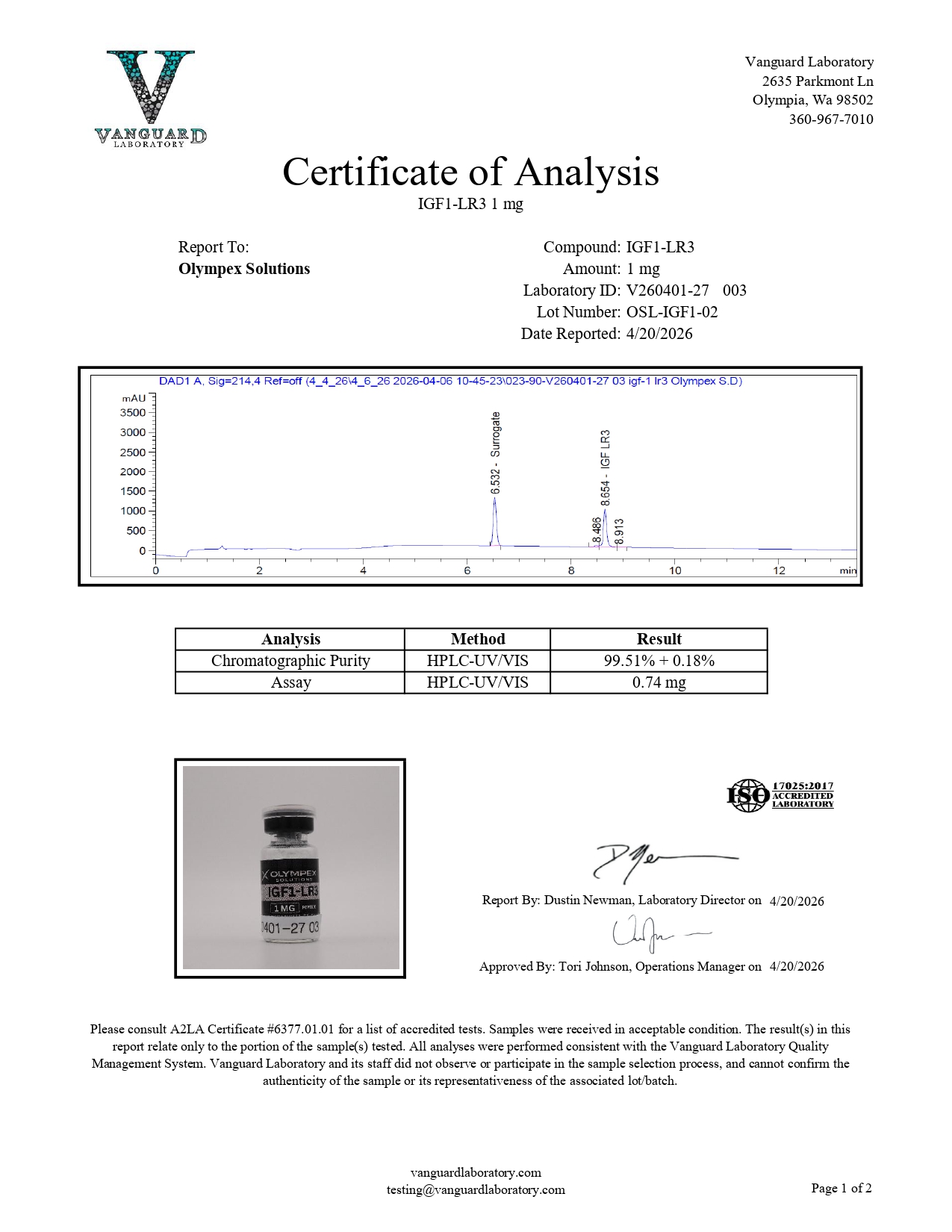
- Purity: ≥98% (HPLC verified, mass spec confirmed)
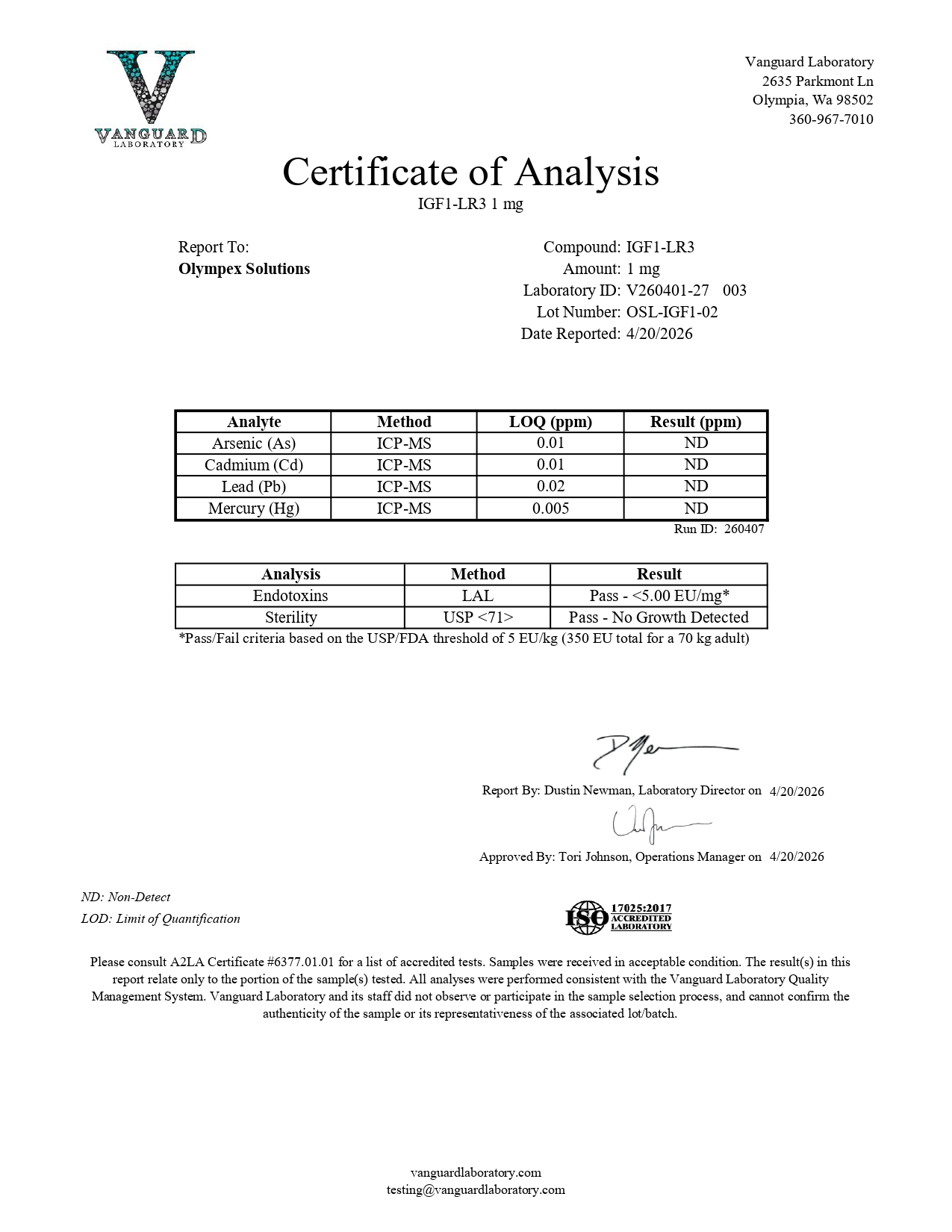
- Endotoxin Level: <0.1 EU/μg
- Appearance: White to off-white lyophilized powder
- Solubility: Soluble in dilute acetic acid or neutral buffers; best in slightly acidic solutions (pH 6.0-7.0)
- Storage: -20°C stable (lyophilized), -80°C for long-term (>6 months)
- Reconstituted Stability: 7-14 days at 2-8°C when prepared with appropriate preservatives
Bioactivity Verification:
Each batch tested for proliferation activity on MCF-7 or NIH-3T3 cells, ensuring EC₅₀ values consistent with literature standards (typically 1-10 ng/mL for cellular proliferation assays). This functional verification distinguishes research-grade material from degraded or misfolded peptide products.
Reconstitution Protocols & Research Methodologies
Solvent Selection:
Reconstitute IGF-1 LR3 1mg with 1-2ml of bacteriostatic water containing 0.6% acetic acid (sterile) to create a 0.5-1mg/ml stock solution at pH ~6.0. The slight acidity prevents oxidation of methionine residues (positions 59 and 67) and maintains the tertiary structure essential for receptor binding. Neutralize with phosphate buffer immediately before cell culture application to prevent acid-induced cellular stress.
Handling Precautions:
IGF-1 peptides adsorb strongly to glass and plastic surfaces. To minimize loss:
- Use polypropylene vials and low-binding pipette tips
- Pre-wet containers with 0.1% BSA (bovine serum albumin) solution to block binding sites
- Avoid vigorous vortexing which can denature the three-disulfide bond structure
- Store working aliquots at -80°C for single use to prevent freeze-thaw degradation
Administration in Research Models:
Due to its extended half-life, IGF-1 LR3 requires less frequent administration than native IGF-1. Typical research protocols utilize once-daily or every-other-day dosing in animal models (10-100 μg/kg depending on endpoint). For local tissue research (e.g., intramuscular injection for site-specific hypertrophy studies), concentrations of 10-50 μg/site prove effective without systemic spillover effects.
vs. Systemic GH Secretagogues:
Unlike CJC-1295/Ipamorelin, which stimulates pulsatile GH release and subsequent hepatic IGF-1 production, IGF-1 LR3 bypasses the hypothalamic-pituitary axis entirely. This distinction proves crucial for research examining direct tissue effects versus endocrine axis feedback, and for models where GH-mediated side effects (insulin resistance, water retention) must be avoided.
Comparative Pharmacology & Research Positioning
IGF-1 LR3 vs. BPC-157:
Both peptides accelerate healing, yet through fundamentally distinct mechanisms. BPC-157 (Body Protection Compound) functions primarily through angiogenesis stimulation, nitric oxide synthesis, and growth factor upregulation (VEGF, TGF-β). IGF-1 LR3 operates through direct IGF1R activation triggering PI3K/Akt survival pathways and mTOR-mediated protein synthesis. Research comparing these approaches—indirect environmental modification versus direct cellular programming—elucidates whether healing requires vascular ingrowth (angiogenesis) or cellular proliferation (mitogenesis) as the primary therapeutic target.
IGF-1 LR3 vs. GH Secretagogues:
While CJC-1295 and growth hormone-releasing peptides stimulate endogenous IGF-1 production, they also elevate GH levels, causing lipolysis, insulin antagonism, and organomegaly risks. IGF-1 LR3 provides IGF-1-specific signaling without GH-mediated metabolic derangements, allowing researchers to isolate IGF-1’s anabolic effects from GH’s lipolytic and anti-insulin actions. This specificity proves essential for metabolic research requiring pure anabolic stimulation without energy substrate mobilization.
IGF-1 LR3 vs. Native IGF-1:
The LR3 analog’s reduced IGFBP binding creates pharmacokinetic profiles impossible to achieve with native IGF-1. Research using native IGF-1 reflects physiological paracrine/autocrine signaling constrained by binding proteins, while IGF-1 LR3 enables investigation into supraphysiological, sustained receptor activation—models relevant for understanding cellular responses to growth factor overload, receptor downregulation, and mitogenic threshold determination.
Safety Considerations & Research Limitations
Hypoglycemia Risk:
Despite reduced insulin receptor affinity, high-dose IGF-1 LR3 can activate insulin receptors, particularly in research models with high receptor density (adipose tissue, muscle). Protocols must monitor blood glucose, as IGF-1’s “insulin-like” activity can induce hypoglycemia distinct from the hyperglycemia sometimes associated with GH administration.
Cellular Senescence & Cancer Research:
IGF-1 is a potent mitogen; sustained activation may accelerate cellular senescence or transformation in susceptible cell lines. Research protocols should include p53 status verification and senescence-associated β-galactosidase staining to distinguish healthy proliferation from oncogenic transformation, particularly in long-term (>4 week) studies.
Tissue Specificity Challenges:
Unlike locally acting peptides such as [BPC-157](https://specialkzone.com/product/bpc-157/), IGF-1 LR3 exhibits systemic distribution when administered parenterally, potentially activating IGF1R in unintended tissues (including potentially pre-malignant cells). Researchers must weigh the benefits of sustained systemic exposure against the precision of local delivery methods.
Frequently Asked Research Questions
What distinguishes IGF-1 LR3 from DES(1-3)IGF-1?
IGF-1 LR3 features the full IGF-1 sequence plus N-terminal extension and Arg³ substitution. DES(1-3)IGF-1 lacks the first three N-terminal amino acids, creating a different binding profile. LR3 offers longer half-life and more predictable pharmacokinetics for sustained research protocols.
Can IGF-1 LR3 be used in cell culture without serum?
Yes, this is a primary research advantage. The reduced IGFBP affinity means IGF-1 LR3 remains bioavailable even in serum-free media, unlike native IGF-1 which requires serum binding proteins for stability but becomes sequestered and inactive.
Why is acetic acid recommended for reconstitution?
The acidic environment (pH 5-6) maintained by dilute acetic acid prevents methionine oxidation and disulfide bond scrambling, preserving the tertiary structure. Neutral pH solutions may cause aggregation over time. Always buffer to physiological pH before biological application.
How does IGF-1 LR3 affect insulin sensitivity in research models?
Chronic high-dose administration may induce insulin resistance through IRS-1 serine phosphorylation and downstream signaling interference, though less severely than GH administration. Research should include glucose tolerance testing and HOMA-IR calculations when studying metabolic endpoints.
Is this product suitable for oral administration research?
No, like most peptides (including [BPC-157](https://specialkzone.com/product/bpc-157/) in many contexts), IGF-1 LR3 faces gastric acid degradation and poor intestinal permeability. Research requires parenteral (SC, IP, or IV) or local (intramuscular, topical) administration.
IGF1-LR3 is a research compound in lyophilized powder form for laboratory research, testing, and analytical applications.
-
Compound: IGF1-LR3
-
Quantity: 1 mg
-
Purity: ≥99% (HPLC Certified)
-
Form: Lyophilized powder
-
Appearance: White to off-white powder
-
Solubility: Soluble in laboratory-grade sterile water
-
COA: Included in product image gallery

Reviews
There are no reviews yet.