




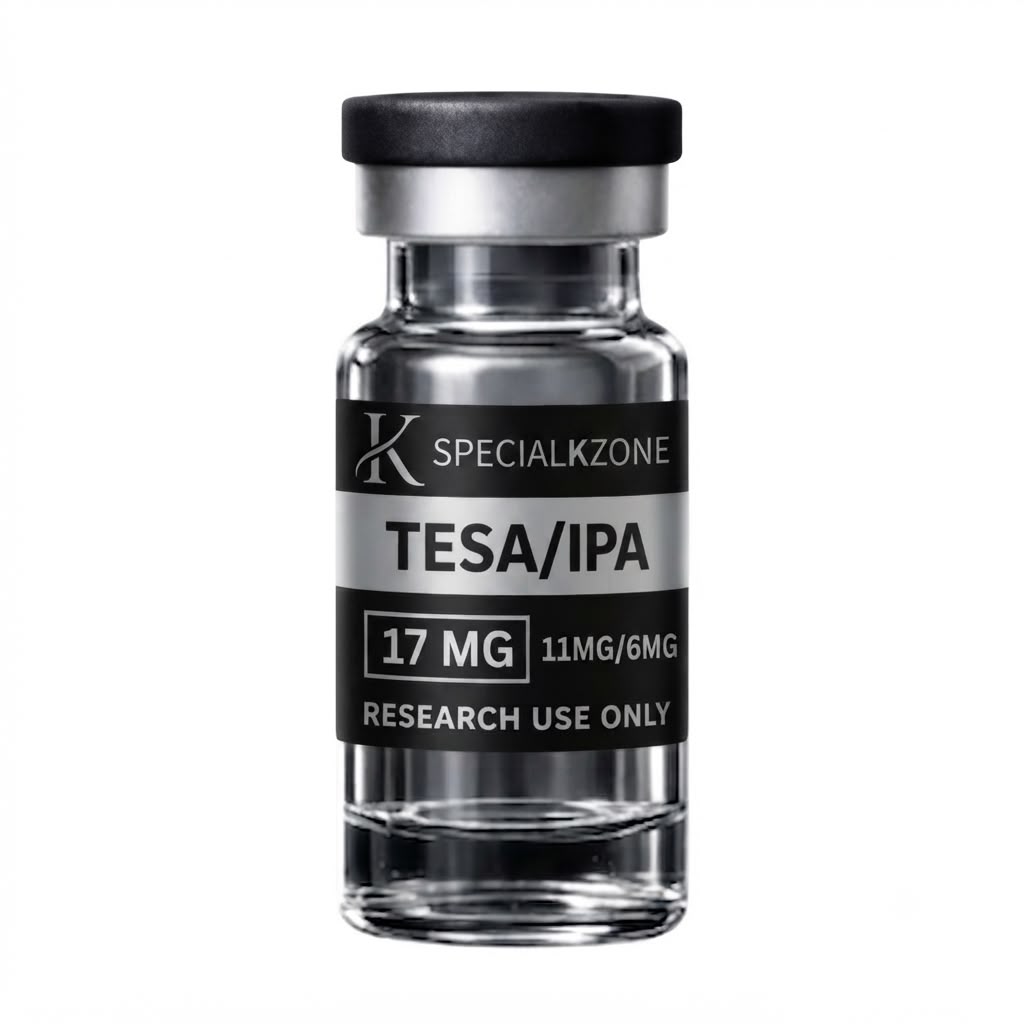
Tesa/Ipa Blend 10mg – Tesamorelin-Ipamorelin Synergistic Stack for Growth Hormone Axis Research
Our pharmaceutical-grade Tesa-Ipa Blend combines Tesamorelin (synthetic growth hormone-releasing hormone analog) with Ipamorelin (selective growth hormone secretagogue) in a precisely calibrated formulation designed to investigate the synergistic amplification of endogenous growth hormone pulsatility. Unlike single-mechanism secretagogues, this dual-agonist approach exploits complementary pathways: Tesamorelin activates GHRH receptors on anterior pituitary somatotrophs to stimulate GH synthesis and release, while Ipamorelin bypasses somatostatin inhibition through GHS-R1a (ghrelin receptor) activation, creating a “push-pull” dynamic that produces supraphysiological GH pulse amplitude without the desensitization or side effect profiles observed with exogenous GH administration. This 10mg lyophilized preparation provides researchers with a clinically relevant tool for investigating metabolic syndrome, visceral adiposity reduction, and body composition remodeling, leveraging Tesamorelin’s FDA-validated efficacy in HIV-associated lipodystrophy alongside Ipamorelin’s superior selectivity compared to first-generation GHRPs.
The pharmacological distinction between this blend and [CJC-1295 No DAC Ipamorelin](#] lies in Tesamorelin’s full GHRH(1-44) analog structure, which activates the complete GHRH receptor signaling cascade distinct from the shortened, modified GRF 1-29 sequence. Tesamorelin specifically targets visceral adipose tissue reduction and triglyceride metabolism, making it indispensable for metabolic research where hepatic steatosis and central obesity represent primary endpoints. When reconstituted with [bacteriostatic water](#], this combination enables investigation into whether dual-secretagogue stimulation can overcome age-related somatopause more effectively than monotherapy, while preserving the natural ultradian rhythm of GH secretion essential for insulin sensitivity and IGF-1 generation.
For endocrinology researchers and metabolic disease laboratories, the Tesa-Ipa Blend offers a bridge between pharmaceutical-grade Tesamorelin (Egrifta) and research-grade peptide synthesis, providing the synergistic GH amplification necessary to study lipolytic mechanisms, nitrogen retention, and the metabolic syndrome reversal without the water retention, carpal tunnel syndrome, or insulin resistance associated with continuous GH infusion.
Dual-Mechanism Synergy & GH Axis Amplification
Tesamorelin (hexenoyl-trans-3-GHRH(1-44) or similar synthetic GHRH analog) functions as a potent GHRH receptor agonist with high affinity for the GHRH receptor on somatotroph cells. Unlike [CJC-1295 No DAC](#] (Mod GRF 1-29), which contains only the first 29 amino acids of GHRH with modifications for half-life extension, Tesamorelin preserves the full pharmacological activity of the native hormone, including specific binding kinetics that favor visceral adipose tissue lipolysis and hepatic lipid metabolism regulation.
Complementary Pathways:
When combined with Ipamorelin, the two peptides create synergistic GH release exceeding the arithmetic sum of individual effects. Tesamorelin stimulates GH gene transcription and secretion through the canonical Gsα/cAMP/PKA pathway, while Ipamorelin concurrently activates GHS-R1a via the phospholipase C/IP3/Ca²⁺ cascade and suppresses hypothalamic somatostatin release. This dual stimulation prevents the negative feedback inhibition that normally limits GHRH efficacy, effectively “opening the faucet” of GH secretion while Ipamorelin simultaneously removes the “brake” of somatostatin tone.
Preservation of Pulsatility:
Unlike exogenous GH which creates continuous elevation leading to receptor downregulation and insulin resistance, the Tesa-Ipa Blend maintains physiological pulsatility with approximately 90-120 minute cycles, preserving GH receptor sensitivity and the metabolic benefits of intermittent IGF-1 generation. This distinguishes it from long-acting GH preparations or continuous infusion models, making it essential for research into the pattern-dependent effects of GH on lipolysis, protein synthesis, and glucose homeostasis.
Visceral Adipose Specificity:
Tesamorelin demonstrates particular efficacy in reducing visceral adipose tissue (VAT) and hepatic triglyceride content, independent of subcutaneous fat changes or total body weight. This specificity makes the blend valuable for investigating the pathophysiology of central obesity, non-alcoholic fatty liver disease (NAFLD), and the metabolic syndrome phenotype characterized by ectopic fat deposition.
Research Applications & Metabolic Models
Growth Hormone Deficiency & Somatopause:
The primary application involves adult growth hormone deficiency (AGHD) and age-related GH decline (somatopause). Research protocols examine whether the Tesa-Ipa Blend can restore youthful GH pulse patterns, improve body composition (increase lean mass, reduce adiposity), and enhance quality of life metrics without the side effects of GH replacement therapy. Studies focus on the differential effects of restored GH pulsatility versus continuous GH exposure on insulin sensitivity and lipid profiles.
HIV-Associated Lipodystrophy:
Tesamorelin’s clinically validated indication for reducing excess abdominal fat in HIV-infected patients with lipodystrophy provides a research model for investigating GH-mediated lipolysis in the context of metabolic dysregulation. The addition of Ipamorelin may enhance the GH response in patients with relative GH secretagogue resistance, potentially offering superior outcomes to Tesamorelin monotherapy. Research examines triglyceride levels, visceral adipose tissue quantification (CT/MRI), and growth hormone secretagogue receptor expression in adipose depots.
Metabolic Syndrome & NAFLD:
For non-alcoholic fatty liver disease and metabolic syndrome research, the blend targets hepatic steatosis through GH-mediated stimulation of hepatic lipase and hormone-sensitive lipase, promoting triglyceride hydrolysis and fatty acid oxidation. Unlike [BPC-157](#], which addresses tissue repair through angiogenesis and growth factor modulation, the Tesa-Ipa Blend targets the metabolic and endocrine drivers of ectopic fat accumulation, potentially reversing insulin resistance through VAT reduction and adipokine profile normalization.
Body Composition & Performance:
Research into sarcopenia, cachexia, and athletic performance examines whether synergistic GH secretion enhances protein synthesis, collagen remodeling, and nitrogen retention more effectively than single-agent protocols. Studies compare the blend to [CJC-1295 No DAC Ipamorelin](#], investigating whether Tesamorelin’s full GHRH sequence offers superior anabolic or lipolytic effects compared to the shortened Mod GRF analog.
Anti-Aging & Longevity:
The “somatopause” hypothesis of aging suggests that declining GH contributes to sarcopenia, osteoporosis, and metabolic decline. Research investigates whether the Tesa-Ipa Blend can delay these biomarkers of aging while maintaining cancer surveillance (theoretical concern with GH) through endogenous pulsatility rather than supraphysiological continuous exposure.
Product Specifications & Molecular Characteristics
- Composition: Tesamorelin + Ipamorelin blend (typically 1:1 ratio by weight)
- Total Content: 10mg per vial (lyophilized powder, typically 5mg each peptide)
- Tesamorelin Structure: Synthetic analog of human GHRH(1-44) with trans-3-hexenoic acid modification at N-terminus (or similar stabilizing modification depending on synthesis)
- Tesamorelin Molecular Weight: ~3,746 Da (depending on exact sequence and modifications)
- Ipamorelin Sequence: Aib-His-D-2-Nal-D-Phe-Lys-NH₂
- Ipamorelin Molecular Weight: 711.85 g/mol
- Mechanism: Dual GHRH receptor and GHS-R1a agonism
- Purity: ≥98% for each component (HPLC verified)
- Appearance: White fluffy lyophilized powder
- Solubility: Soluble in aqueous buffers, optimal in bacteriostatic water with slight acidity
- Storage: -20°C stable (lyophilized), 2-8°C after reconstitution
- Reconstituted Stability: 7-14 days at 2-8°C when prepared with appropriate preservatives
Quality Verification:
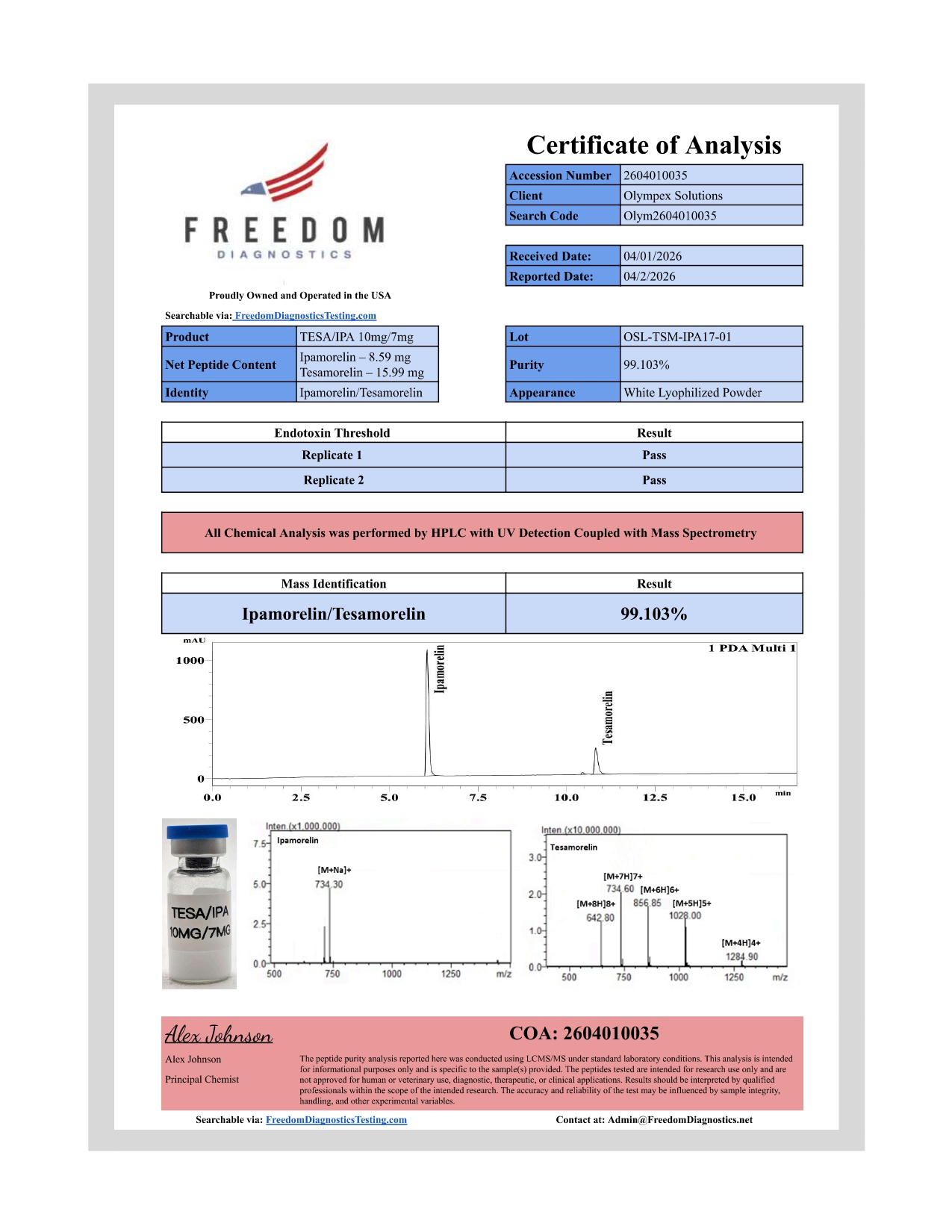
Each batch analyzed via mass spectrometry to confirm both molecular weights and verify absence of cross-contamination. Bioactivity confirmed through GH release assays in rat pituitary cell cultures, demonstrating synergistic amplification (typically 200-300% of individual peptide effects at equivalent concentrations).
Reconstitution & Research Protocols
Preparation Guidelines:
Reconstitute the 10mg blend with 2ml of [bacteriostatic water](#] to create a 5mg/ml stock solution (2.5mg/ml each peptide). Due to Tesamorelin’s larger size and hydrophobic patches, gentle swirling for 2-3 minutes may be required for complete dissolution. The solution should be clear; cloudiness indicates aggregation or pH incompatibility. For optimal stability, reconstitute with water containing 0.6% acetic acid and buffer to pH 7.0-7.4 before administration.
Dosing Strategy:
Research protocols typically employ 50-100 mcg/kg of the blend (providing ~25-50 mcg/kg each peptide) administered 1-2 times daily to mimic physiological GH pulsatility. Morning and evening dosing aligns with natural GH secretory peaks. Unlike [BPC-157](#], which can be administered continuously or in high-frequency protocols, the Tesa-Ipa Blend requires spacing to prevent receptor desensitization and to maintain the pulsatile pattern essential for metabolic benefits.
Route of Administration:
Subcutaneous injection remains the gold standard for research, providing reliable bioavailability and absorption kinetics. Intranasal administration is not recommended for Tesamorelin due to its large size (3.7 kDa) and susceptibility to enzymatic degradation in the nasal mucosa, unlike smaller peptides such as [DSIP Spray](#].
Timing Considerations:
Administer in the morning (fasted or post-prandial depending on research question) and/or evening before sleep to coincide with natural GH peaks. For metabolic studies, morning administration may better target daytime lipolysis, while evening dosing may enhance nocturnal recovery and protein synthesis.
Synergy Monitoring:
Research should monitor IGF-1 levels, GH pulse patterns (if frequent sampling available), fasting glucose, and lipid profiles to verify synergistic effects versus individual peptide administration. Body composition assessment (DEXA, MRI) at 4-8 week intervals evaluates visceral adipose changes.
Comparative Analysis: Tesa-Ipa vs. Alternative Protocols
Tesa-Ipa vs. CJC-1295 No DAC/Ipamorelin:
Both blends combine a GHRH analog with Ipamorelin, but [CJC-1295 No DAC](#] (Mod GRF 1-29) is a truncated 29-amino acid sequence with D-Ala² substitution for DPP-4 resistance, while Tesamorelin represents the full GHRH(1-44) analog. Research suggests Tesamorelin may offer superior visceral adipose reduction and hepatic lipid metabolism effects due to complete receptor activation, while CJC-1295 No DAC may provide more cost-effective GH elevation for general research. Tesamorelin’s shorter half-life requires more frequent dosing but produces more physiological pulse patterns.
Tesa-Ipa vs. BPC-157:
While [BPC-157](#] promotes tissue healing, angiogenesis, and structural repair through growth factor upregulation, the Tesa-Ipa Blend enhances metabolic function, lipolysis, and anabolic status through endocrine axis modulation. BPC-157 repairs damaged tissue; Tesa-Ipa prevents metabolic deterioration and enhances substrate utilization. Combination research investigates whether optimized GH status (Tesa-Ipa) accelerates the structural healing mediated by BPC-157, particularly in diabetic wound healing or recovery from injury where both metabolic dysfunction and tissue damage coexist.
Tesa-Ipa vs. MOTS-c:
Both address metabolic syndrome but through distinct mechanisms. [MOTS-c](#] is a mitochondrial-derived peptide that activates AMPK and improves cellular insulin sensitivity independent of GH. Tesa-Ipa improves metabolic parameters primarily through GH-mediated lipolysis and visceral fat reduction. Research compares whether cellular energy sensing (MOTS-c) or endocrine lipolytic stimulation (Tesa-Ipa) proves more effective for metabolic syndrome reversal, with combination protocols potentially addressing both adipose tissue excess and mitochondrial dysfunction.
Safety Considerations & Research Limitations
Glucose Homeostasis:
As with all GH-stimulating compounds, the Tesa-Ipa Blend can induce transient insulin resistance and elevated fasting glucose through GH’s anti-insulin effects on skeletal muscle and adipose tissue. Research protocols should include glucose tolerance testing and HOMA-IR calculations, particularly in models of pre-existing metabolic syndrome or diabetes.
Water Retention:
GH stimulation increases extracellular fluid through sodium retention and increased capillary permeability. Research should distinguish between lean tissue accretion and fluid retention using body composition analysis rather than simple weight measurements.
Acromegaloid Features:
Chronic supraphysiological GH exposure can produce acromegalic changes (jaw thickening, organomegaly). The pulsatile nature of the Tesa-Ipa Blend reduces this risk compared to continuous GH, but long-term studies (6+ months) should monitor for tissue overgrowth.
Cost and Availability:
Tesamorelin synthesis is more complex than CJC-1295 due to its larger size (44 amino acids vs. 29), making it more expensive for large-scale or long-term research protocols. Investigators should balance the potential benefits of full GHRH activity against budget constraints.
Frequently Asked Research Questions
How does Tesamorelin differ from CJC-1295?
Tesamorelin is the full GHRH(1-44) analog (or closely related synthetic) with complete receptor binding, while CJC-1295 No DAC is a truncated 29-amino acid analog. Tesamorelin specifically targets visceral adipose reduction and has FDA approval for HIV lipodystrophy, offering more clinical validation for metabolic research.
Why combine with Ipamorelin rather than use Tesamorelin alone?
Ipamorelin suppresses somatostatin and activates GHS-R1a, removing the negative feedback that limits GHRH efficacy and producing synergistic GH release (typically 2-3x either peptide alone). This combination mimics the physiological coordination between hypothalamic GHRH and gastric ghrelin.
Can this blend be used for muscle growth research?
Yes, the elevated GH and IGF-1 promote nitrogen retention and protein synthesis. However, for pure anabolic research without metabolic endpoints, [CJC-1295 No DAC Ipamorelin](#] may offer more cost-effective GH elevation. Tesamorelin’s strength lies in the metabolic/visceral fat reduction component.
What is the best time to administer?
Morning (fasting or post-prandial) and/or evening before sleep to coincide with natural GH secretory peaks. Avoid administration immediately before intense exercise if researching metabolic parameters, as exercise-induced GH may confound results.
How does this compare to HGH injections?
The blend stimulates endogenous pulsatile GH secretion, preserving natural feedback mechanisms and producing a more physiological IGF-1 profile. Exogenous GH creates continuous elevation associated with side effects (insulin resistance, water retention, acromegaly risk) and is detectable in doping tests, whereas the blend stimulates natural production patterns.
Tesa/Ipa is a research compound supplied in lyophilized powder form for laboratory research, testing, and analytical applications.
-
Compound: Tesa/Ipa
-
Quantity: 17 mg
-
Purity: ≥99% (HPLC Certified)
-
Form: Lyophilized powder
-
Appearance: White to off-white powder
-
Solubility: Soluble in laboratory-grade sterile water
-
COA: Included in product image gallery
This peptide analog is supplied strictly for laboratory research.
It is not intended for human or animal administration, and must not be used for diagnostic, therapeutic, or clinical applications.




Reviews
There are no reviews yet.