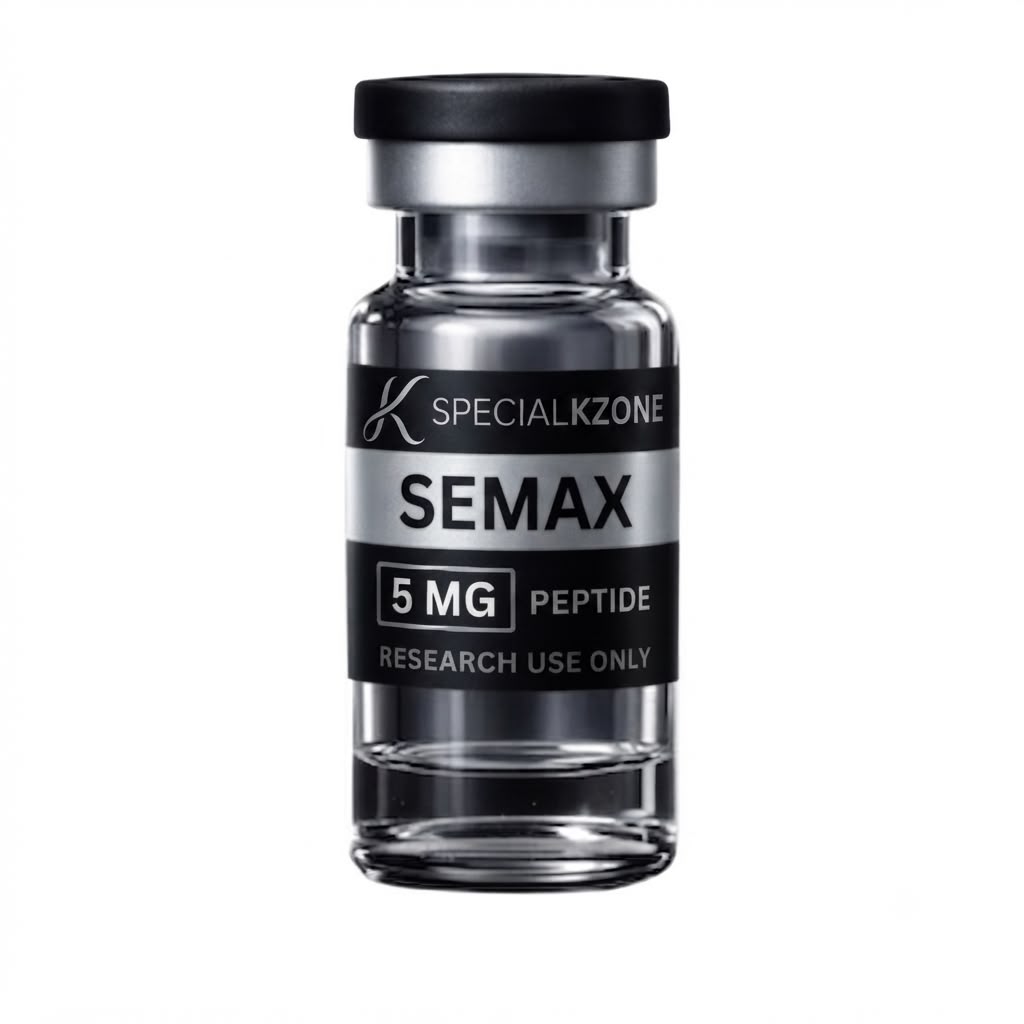
Semax 10mg – ACTH-Derived Nootropic for Cognitive Enhancement & Neuroprotection Research
Our pharmaceutical-grade Semax (Met-Glu-His-Phe-Pro-Gly-Pro) represents a synthetic analog of adrenocorticotropic hormone (ACTH) fragment 4-10, developed at the Institute of Molecular Genetics in Russia to isolate the cognitive and neuroprotective properties of ACTH while eliminating the corticotropic effects that stimulate adrenal glucocorticoid release. This heptapeptide has emerged as a cornerstone of nootropic research, demonstrating unique mechanisms involving brain-derived neurotrophic factor (BDNF) upregulation, dopaminergic system modulation, and melanocortin receptor activation that enhance synaptic plasticity, attention, and memory formation without the peripheral stress axis activation associated with full-length ACTH. Unlike [Selank](#], which primarily modulates anxiety through enkephalinergic and GABAergic systems, Semax functions as a cognitive stimulant and neuroprotectant, making it essential for research into attention-deficit disorders, post-stroke recovery, and optimal cognitive performance.
The structural design of Semax—replacing the ACTH(4-10) C-terminus with a proline-glycine-proline motif—confers resistance to peptidase degradation and facilitates blood-brain barrier penetration, allowing for intranasal administration that achieves rapid CNS bioavailability. Research indicates that Semax does not bind to glucocorticoid receptors or stimulate cortisol synthesis, distinguishing it pharmacologically from stress hormones and positioning it as a “cognition-specific” melanocortin analog. When reconstituted with [bacteriostatic water](#], this lyophilized preparation enables investigation into the molecular mechanisms of learning and memory, including the BDNF/trkB signaling cascade essential for long-term potentiation and synaptic consolidation.
For neuropharmacology researchers studying the intersection of neurotrophic support and catecholaminergic function, or investigating neuroprotection strategies distinct from structural repair peptides like [BPC-157](#], Semax offers a tool for functional enhancement of neural circuits through gene expression modulation rather than tissue remodeling.
Mechanisms of Action: BDNF, Dopamine & Melanocortin Signaling
Semax (molecular weight 813.92 Da) exerts its nootropic and neuroprotective effects through a tripartite mechanism involving neurotrophic factor upregulation, catecholamine system modulation, and selective melanocortin receptor interaction—pathways that converge to enhance synaptic plasticity and neuronal survival.
BDNF/trkB Activation:
The primary cognitive mechanism involves transcriptional upregulation of brain-derived neurotrophic factor (BDNF) and its high-affinity receptor trkB (tropomyosin receptor kinase B). Semax increases BDNF mRNA and protein expression in the hippocampus and cerebral cortex, facilitating long-term potentiation (LTP), synaptogenesis, and neurogenesis. This neurotrophic action proves particularly relevant for research into recovery from stroke, traumatic brain injury, and neurodegenerative diseases where BDNF levels decline. Unlike [CJC-1295](#], which influences metabolism and secondary cognitive effects through growth hormone axis modulation, Semax provides direct neurotrophic support independent of somatotropic signaling.
Dopaminergic Modulation:
Semax enhances dopaminergic neurotransmission through multiple mechanisms: upregulation of tyrosine hydroxylase (the rate-limiting enzyme in dopamine synthesis), increased dopamine release in the mesolimbic and mesocortical pathways, and modulation of D2/D3 receptor sensitivity. This dopaminergic enhancement explains the peptide’s efficacy in improving attention, working memory, and motivational salience without the locomotor hyperactivity or receptor desensitization associated with amphetamine stimulants. Research investigates whether Semax can restore dopaminergic tone in Parkinson’s disease models or attention-deficit disorders without the cardiovascular side effects of traditional psychostimulants.
Melanocortin System Interaction:
As an ACTH(4-10) analog, Semax interacts with melanocortin receptors (particularly MC4R and MC5R) in the central nervous system, but critically lacks the corticotropic activity of full-length ACTH. This allows researchers to investigate melanocortin-mediated cognitive enhancement—such as improved attention and arousal—without the immunosuppressive, metabolic, or stress-related side effects of HPA axis activation. This mechanism differs from [PT-141](#] (Bremelanotide), which targets MC4R for sexual arousal, whereas Semax engages these receptors for cognitive and neurotrophic endpoints.
Anti-Ischemic & Antioxidant Properties:
Semax demonstrates neuroprotective effects in cerebral ischemia models by reducing glutamate excitotoxicity, stabilizing mitochondrial membrane potential, and upregulating antioxidant enzymes (superoxide dismutase, catalase). These properties make it valuable for acute stroke research and chronic neurodegeneration studies where oxidative stress contributes to neuronal death.
Research Applications & Therapeutic Models
Cognitive Enhancement & ADHD Models:
The primary application for Semax involves research into attention-deficit disorders, age-related cognitive decline, and optimization of learning/memory in healthy models. Studies demonstrate improved performance in radial arm mazes, object recognition tasks, and five-choice serial reaction time tests—indicating enhanced attention span, working memory, and cognitive flexibility. Unlike traditional stimulants that deplete catecholamine stores, Semax appears to enhance the structural substrate of cognition through BDNF-mediated synaptic strengthening, offering sustainable enhancement without tolerance or rebound effects.
Stroke & Traumatic Brain Injury Recovery:
Research extensively investigates Semax for acute ischemic stroke (neuroprotection) and chronic recovery (neuroplasticity). Administration within hours of ischemic insult reduces infarct volume, improves cerebral perfusion, and enhances functional recovery in motor and cognitive domains. The peptide’s ability to stimulate angiogenesis (VEGF upregulation) and neurogenesis (BDNF) provides dual mechanisms for tissue salvage and circuit reorganization. This functional recovery focus contrasts with [BPC-157](#], which primarily promotes structural healing of vasculature and connective tissue; Semax specifically targets neuronal plasticity and functional reconnection.
Optic Nerve & Retinal Protection:
A unique research application involves Semax for glaucoma, optic neuropathy, and retinal ischemia. The peptide demonstrates retinal ganglion cell neuroprotection and enhancement of visual evoked potentials, potentially through BDNF-mediated support of optic nerve integrity. Studies investigate intraocular pressure-independent neuroprotection and recovery of visual function in optic nerve crush models.
Neurodegenerative Disease Research:
For Parkinson’s disease, Semax research focuses on dopaminergic neuron protection in the substantia nigra and restoration of striatal dopamine levels. In Alzheimer’s models, the peptide addresses cholinergic deficit and amyloid-beta toxicity through BDNF upregulation and antioxidant mechanisms. Research compares Semax to metabolic interventions like [MOTS-c](#], examining whether neurotrophic support or mitochondrial biogenesis proves more effective for cognitive preservation in aging.
Physical & Mental Fatigue:
Semax demonstrates efficacy in models of chronic fatigue and asthenia, improving physical working capacity and mental resilience under stress. Research suggests this results from optimized central dopaminergic tone and improved cerebral energy metabolism rather than peripheral metabolic effects.
Product Specifications & Molecular Characteristics
- Chemical Name: Semax; L-methionyl-L-alpha-glutamyl-L-histidyl-L-phenylalanyl-L-prolylglycyl-L-proline
- Parent Compound: Synthetic analog of ACTH(4-10) (corticotropin fragment)
- Sequence: Met-Glu-His-Phe-Pro-Gly-Pro (heptapeptide)
- Molecular Formula: C₃₇H₅₉N₁₃O₁₀S
- Molecular Weight: 813.92 g/mol
- Total Content: 10mg per vial (lyophilized powder)
- Structure: Linear heptapeptide with C-terminal Pro-Gly-Pro extension
- Purity: ≥99% (HPLC verified)
- Appearance: White to off-white fluffy lyophilized powder
- Solubility: Highly soluble in aqueous solutions (water, saline, bacteriostatic water)
- Storage: -20°C stable (lyophilized), 2-8°C after reconstitution
- Reconstituted Stability: 14 days at 2-8°C when prepared with preservatives
Quality Verification:
Each batch analyzed via mass spectrometry for correct molecular weight (814.4 [M+H]+) and absence of oxidation products (particularly methionine sulfoxide at the N-terminus). Biological activity confirmed through BDNF upregulation assays in neuronal cell cultures or behavioral pharmacology testing in cognitive models (passive avoidance, Morris water maze).
Reconstitution, Administration & Research Protocols
Preparation Guidelines:
Reconstitute Semax 10mg with 2-5ml of bacteriostatic water to create a 2-5mg/ml stock solution. As a hydrophilic heptapeptide, Semax dissolves readily in neutral aqueous solutions. The proline-rich C-terminus confers significant resistance to aminopeptidase degradation, though sterile technique remains essential to prevent microbial contamination that could degrade the N-terminal methionine.
Route of Administration:
Research employs multiple routes depending on study objectives:
- Intranasal: Preferred for CNS targeting due to direct nose-to-brain transport via the olfactory pathway, achieving rapid onset (10-20 minutes) and enhanced cerebral bioavailability compared to parenteral routes.
- Subcutaneous: Standard for systemic studies and sustained cognitive enhancement protocols.
- Intraperitoneal: Common in rodent cognitive pharmacology research.
Dosing Parameters:
Typical research concentrations range from 50-300 mcg/kg body weight in animal models for subcutaneous administration. Intranasal doses are significantly lower (5-50 mcg/kg) due to enhanced CNS penetration and reduced systemic metabolism. Chronic administration studies (4-8 weeks) investigate sustained cognitive enhancement without receptor desensitization or adrenal suppression (a key distinction from ACTH itself).
Timing Considerations:
Due to its stimulatory and wakefulness-promoting effects, Semax administration should occur in the morning or early afternoon. Unlike [DSIP Spray](#], which induces delta-sleep and is administered in the evening, Semax promotes alertness and cognitive engagement, making it suitable for research protocols requiring sustained attention.
Comparative Analysis: Semax vs. Alternative Compounds
Semax vs. Selank:
Both are Russian-developed peptides with cognitive applications, but they represent complementary rather than overlapping mechanisms. [Selank](#] primarily targets anxiety and emotional regulation through enkephalinase inhibition and GABA modulation, producing calm focus suitable for stress-related cognitive impairment. Semax targets attention and memory through BDNF and dopamine, producing alert, motivated cognition suitable for learning and performance. Research often investigates combination protocols where Selank reduces anxiety that might otherwise impair Semax-enhanced cognitive testing.
Semax vs. DSIP Spray:
These peptides occupy opposite poles of the arousal spectrum. [DSIP Spray](#] induces delta-wave sleep, HPA axis inhibition, and parasympathetic dominance. Semax promotes wakefulness, sympathetic activation, and cognitive arousal. Research comparing these compounds investigates the homeostatic regulation of sleep and cognition, potentially utilizing DSIP for sleep-dependent memory consolidation and Semax for wakeful learning optimization.
Semax vs. BPC-157:
Both demonstrate neuroprotective properties in brain injury models, but through distinct mechanisms. [BPC-157](#] promotes structural repair through angiogenesis, collagen synthesis, and cellular proliferation—essentially rebuilding damaged tissue. Semax promotes functional recovery through neurotrophic factor upregulation, synaptic plasticity, and neurotransmitter optimization—essentially enhancing the functional capacity of existing and newly formed circuits. Post-TBI research often combines both to address structural damage (BPC-157) and functional/cognitive recovery (Semax).
Semax vs. Traditional Stimulants:
Unlike amphetamines or methylphenidate that increase catecholamine release acutely (producing tolerance, dependency, and cardiovascular side effects), Semax enhances the structural and molecular substrate of cognition (BDNF, synaptic proteins) without acute catecholamine depletion or receptor downregulation. This positions it as a “neuroplastic” cognitive enhancer rather than a simple psychostimulant.
Safety Considerations & Research Limitations
Absence of Adrenal Stimulation:
A critical safety feature is that Semax does not stimulate the adrenal cortex or increase cortisol/glucocorticoid secretion. Researchers can investigate chronic cognitive enhancement without the immunosuppression, metabolic disruption, or hippocampal atrophy associated with chronic stress hormone elevation.
Blood Pressure & Arousal:
While generally well-tolerated, Semax can produce mild increases in blood pressure and heart rate through sympathetic activation and melanocortin receptor effects. Research protocols should monitor cardiovascular parameters, particularly in models with hypertension or when combining with other stimulatory agents.
Individual Variability:
Effects may vary based on baseline BDNF levels and genetic polymorphisms (particularly BDNF Val66Met). Research should consider stratifying subjects by BDNF genotype to account for differential responsiveness to neurotrophic stimulation.
Frequently Asked Research Questions
How does Semax differ from Selank?
Semax enhances cognitive arousal, attention, and memory through BDNF/dopamine (stimulatory). [Selank](#] reduces anxiety and stabilizes mood through enkephalin/GABA (anxiolytic). They are often described as the “stimulant” and “tranquilizer” poles of Russian peptide nootropics, respectively, and can be combined for balanced cognitive performance.
Does Semax increase cortisol like ACTH?
No. Despite being derived from ACTH(4-10), Semax lacks the corticotropic activity of full-length ACTH. It does not stimulate the adrenal cortex or increase glucocorticoid secretion, making it safe for long-term cognitive research without HPA axis disruption.
Is intranasal delivery effective?
Yes. Like [DSIP Spray](#], Semax achieves excellent CNS penetration via the olfactory pathway, often requiring 10-fold lower doses than subcutaneous administration to achieve equivalent cognitive effects.
Can it be used for stroke recovery?
Extensively researched for acute neuroprotection (reducing infarct size if given within hours of ischemia) and chronic recovery (enhancing neuroplasticity and functional restoration weeks to months post-injury).
Does it cause tolerance?
Unlike amphetamine stimulants, Semax does not appear to produce tolerance, dependence, or withdrawal. Its mechanism involves upregulating neurotrophic factors and synaptic proteins rather than depleting neurotransmitters, supporting sustained efficacy with chronic administration.
Semax is a research compound in lyophilized powder form for laboratory research, testing, and analytical applications.
-
Compound: Semax
-
Quantity: 5 mg
-
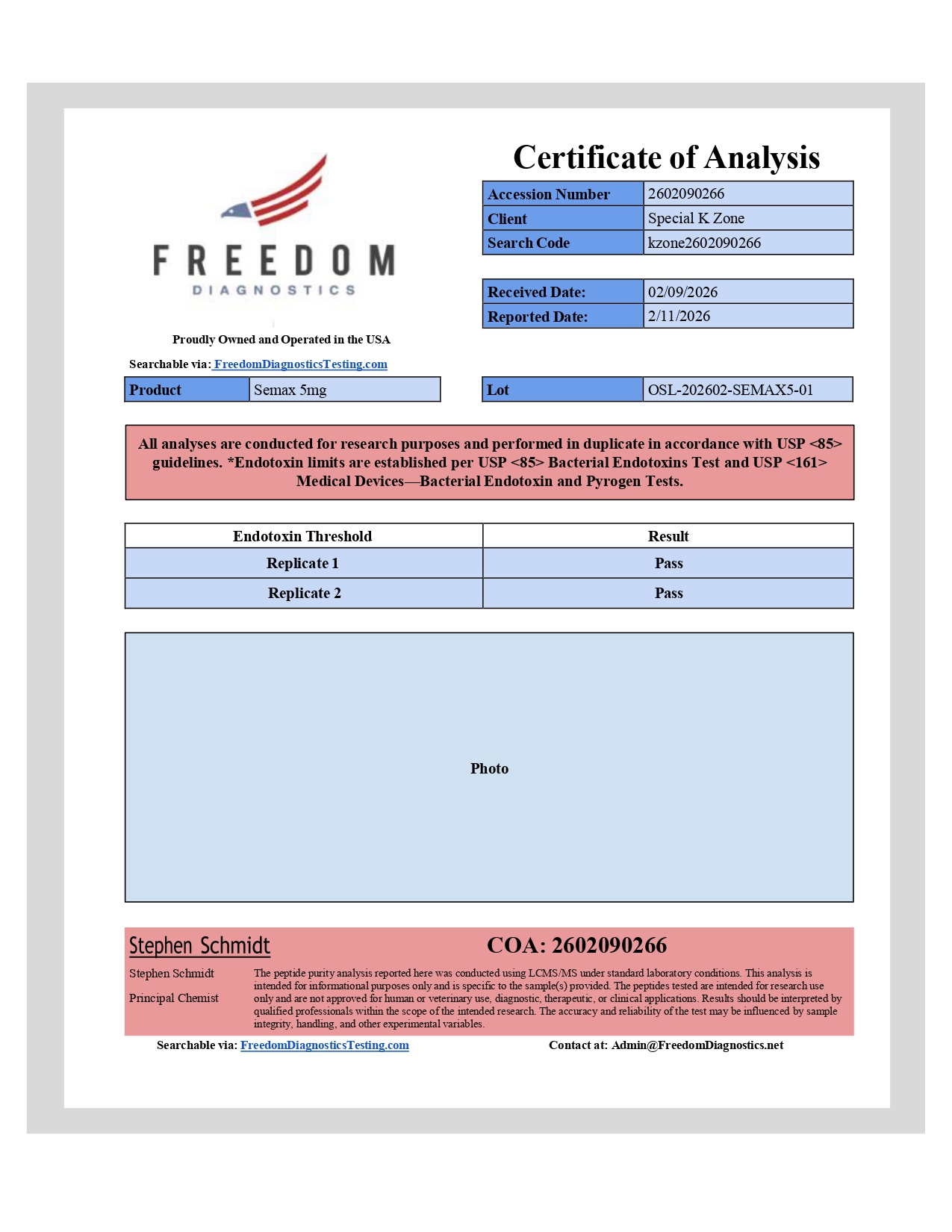
Purity: ≥99% (HPLC Certified)
-
Form: Lyophilized powder
-
Appearance: White to off-white powder
-
Solubility: Soluble in laboratory-grade sterile water
-
COA: Included in product image gallery
This peptide analog is supplied strictly for laboratory research.
It is not intended for human or animal administration, and must not be used for diagnostic, therapeutic, or clinical applications.
Reviews
There are no reviews yet.