Glutathione 100mg – Master Antioxidant Tripeptide for Cellular Protection Research
Intro Paragraph (250 words)
Our pharmaceutical-grade Glutathione (γ-L-Glutamyl-L-cysteinyl-glycine) delivers the body’s primary endogenous antioxidant in its biologically active reduced form, providing research laboratories with a critical tool for investigating oxidative stress mechanisms, phase II detoxification pathways, and cellular redox homeostasis. As a ubiquitous tripeptide found in virtually all mammalian cells at millimolar concentrations, L-Glutathione serves as the central hub of antioxidant defense, directly neutralizing reactive oxygen species (ROS) while regenerating other antioxidants including vitamins C and E, alpha-lipoic acid, and coenzyme Q10. This 100mg lyophilized preparation enables precise investigation into glutathione depletion syndromes, detoxification capacity, and the emerging role of thiol redox status in aging, neurodegeneration, and metabolic disease pathophysiology.
Unlike exogenous antioxidant vitamins that require cellular uptake and enzymatic processing, Glutathione operates through direct chemical interaction with electrophiles and free radicals via its reactive cysteine thiol group (-SH). The γ-glutamyl linkage between glutamate and cysteine (rather than the standard α-linkage) renders this peptide resistant to standard peptidases, requiring specific γ-glutamyl transferase enzymes for catabolism—structural features that make it uniquely suited for intracellular retention and research into xenobiotic metabolism. When reconstituted with bacteriostatic water, this reduced glutathione (GSH) preparation allows investigators to examine cellular protection mechanisms distinct from peptide growth factors like BPC-157 or structural repair agents like GHK-Cu, focusing instead on the fundamental redox chemistry underlying cellular viability and programmed cell death pathways.
For toxicology researchers, dermatology laboratories investigating melanin production pathways, and neuroscientists studying oxidative damage in neurodegenerative models, this 100mg Glutathione vial provides sufficient material for extended protocols examining glutathione peroxidase activity, glutathione S-transferase (GST) mediated detoxification, and the critical balance between reduced (GSH) and oxidized (GSSG) forms that determines cellular oxidative status.
Biochemical Structure & Redox Mechanisms
Glutathione (molecular weight 307.32 Da) exists predominantly in two forms: the reduced sulfhydryl form (GSH) provided in this research preparation, and the oxidized disulfide dimer (GSSG) formed when two GSH molecules donate electrons to neutralize reactive oxygen species. The 100:1 ratio of GSH:GSSG typically maintained in healthy cells serves as a sensitive biomarker of oxidative stress, with ratios below 10:1 indicating severe cellular dysfunction and apoptosis initiation.
The unique γ-glutamyl-cysteinyl-glycine structure positions the cysteine thiol group for optimal nucleophilic attack on electrophilic compounds. This chemical reactivity enables Glutathione to participate in multiple protective mechanisms: direct scavenging of hydroxyl radicals and singlet oxygen, reduction of hydrogen peroxide and lipid peroxides via glutathione peroxidase (GPx) enzymes, and conjugation with xenobiotics through glutathione S-transferase (GST) enzymes for phase II detoxification and biliary excretion.
Cellular Synthesis vs. Exogenous Administration:
While cells synthesize glutathione from glutamate, cysteine, and glycine via ATP-dependent enzymes (γ-glutamylcysteine synthetase and glutathione synthetase), research utilizing exogenous L-Glutathione investigates whether direct administration can overcome synthetic limitations imposed by cysteine availability, oxidative stress-induced feedback inhibition, or genetic polymorphisms in glutathione-related enzymes. This research proves particularly relevant for conditions involving mitochondrial dysfunction, where endogenous production fails to meet oxidative demands.
Research Applications & Therapeutic Models
Dermatology & Melanin Regulation:
The primary cosmetic science application for Glutathione research involves investigation into melanin production inhibition and skin brightening mechanisms. Unlike tyrosinase inhibitors that merely block melanin synthesis, glutathione shifts melanogenesis from eumelanin (brown/black) to pheomelanin (yellow/red) through thiol-mediated interference with tyrosinase copper binding sites. Additionally, Glutathione reduces dermal oxidative damage from UV radiation, complementing GHK-Cu research on collagen synthesis by addressing the oxidative component of photoaging distinct from copper-mediated repair mechanisms.
Hepatotoxicity & Detoxification Studies:
For toxicology research, Glutathione serves as the primary substrate for conjugating acetaminophen metabolites (NAPQI), aflatoxins, and heavy metals. Research protocols investigate whether exogenous glutathione administration can prevent acetaminophen-induced hepatic necrosis, alcohol-related oxidative liver damage, or chemotherapy-induced hepatotoxicity. The peptide’s role in mercury and arsenic chelation provides research avenues for environmental toxicology and occupational exposure models.
Neurodegenerative Disease Models:
In Parkinson’s and Alzheimer’s research, Glutathione investigation focuses on the “oxidative stress hypothesis” of neurodegeneration. The substantia nigra exhibits particularly high glutathione content, and depletion correlates with dopaminergic neuron vulnerability. Research examines whether glutathione restoration can prevent α-synuclein aggregation or amyloid-beta induced lipid peroxidation, offering neuroprotective strategies distinct from growth factor approaches like BPC-157 or metabolic interventions like GLP-3 RT.
Immunology & Inflammatory Modulation:
Glutathione regulates T-cell proliferation, cytokine production patterns (Th1 vs. Th2 balance), and macrophage activation states. Research utilizes this antioxidant to investigate redox-sensitive transcription factors including NF-κB and AP-1, examining how thiol status influences inflammatory gene expression. This application proves crucial for autoimmune disease models and sepsis research where oxidative burst from neutrophils must be carefully modulated.
Cancer Research & Chemotherapy Support:
Paradoxically, elevated glutathione levels in tumor cells confer chemotherapy resistance through enhanced detoxification of alkylating agents and platinum compounds. Research investigates glutathione depletion strategies (using buthionine sulfoximine) combined with exogenous administration to normal tissues, exploring differential protection of healthy versus malignant cells during cytotoxic therapy.
Product Specifications & Analytical Verification
- Chemical Name: γ-L-Glutamyl-L-cysteinyl-glycine (Reduced Form)
- Synonyms: L-Glutathione Reduced, GSH, γ-Glu-Cys-Gly
- Molecular Formula: C₁₀H₁₇N₃O₆S
- Molecular Weight: 307.32 g/mol
- Total Content: 100mg per vial (lyophilized powder)
- Form: Reduced (active thiol) form, not oxidized (GSSG)
- Purity: ≥99% (HPLC verified)
- Appearance: White crystalline powder
- Solubility: Highly soluble in water (50mg/ml), forms clear solution
- Storage: -20°C stable (lyophilized), 2-8°C after reconstitution
- Stability: 24 months frozen; reconstituted solution stable 7-14 days refrigerated
- pH (1% solution): 2.8-3.4 (acidic due to glutamyl carboxyl groups)
Quality Control Notes:
Each batch verified for reduced thiol content via Ellman’s assay (DTNB reaction), ensuring >98% of product exists as active GSH rather than oxidized GSSG. This distinction proves critical for research validity, as oxidized glutathione lacks antioxidant capacity and may produce pro-oxidant effects in certain cellular contexts.
Reconstitution, Handling & Research Protocols
Solvent Selection & Preparation:
Reconstitute the 100mg Glutathione vial with 2-5ml of bacteriostatic water to create a 20-50mg/ml stock solution. Unlike peptide hormones requiring specific pH buffers, glutathione demonstrates excellent solubility in plain aqueous solutions, though acidic conditions (pH 2-3) maximize stability by preventing thiol oxidation. For cell culture applications, dilute further in PBS or serum-free medium immediately before use, as serum proteins may bind glutathione or catalyze oxidation.
Critical Handling Considerations:
The reactive thiol group (-SH) renders Glutathione susceptible to oxidation when exposed to air, light, or metal ions. Research protocols should:
- Minimize vial headspace after reconstitution to reduce oxygen exposure
- Use amber or foil-wrapped containers to prevent photoxidation
- Avoid metal needles/syringes containing copper or iron ions that catalyze disulfide formation
- Prepare fresh solutions weekly; oxidized solutions (turning yellow) indicate GSSG formation and reduced research validity
Administration Routes:
Research models employ intravenous, intraperitoneal, or topical administration depending on study objectives. Unlike BPC-157 which demonstrates oral bioactivity in some research contexts, Glutathione faces significant degradation by intestinal γ-glutamyl transpeptidase and should be administered parenterally for systemic research. For skin penetration studies, liposomal encapsulation or transdermal carriers prove necessary due to the hydrophilic nature of the tripeptide.
Dosage Ranges:
Typical research concentrations range from 10-100mg/kg body weight in rodent models for systemic antioxidant effects, while cell culture studies utilize 0.1-5mM concentrations depending on oxidative stress induction levels. Researchers should measure GSH/GSSG ratios in tissue samples via HPLC or spectrophotometric assays to verify biological activity rather than assuming administration equals cellular uptake.
Comparative Analysis: Glutathione vs. Peptide Therapeutics
Glutathione vs. BPC-157:
While both compounds promote cellular protection and healing, Glutathione operates through chemical antioxidant mechanisms and detoxification enzymology, whereas BPC-157 functions through growth factor modulation and angiogenesis signaling. Glutathione addresses oxidative damage prevention; BPC-157 addresses structural repair after damage occurs. Combination research investigating whether antioxidant preconditioning enhances subsequent healing factor efficacy represents an emerging research frontier.
Glutathione vs. GHK-Cu:
Both compounds influence skin health and aging, yet through distinct pathways. GHK-Cu (Copper Peptide) stimulates collagen synthesis and tissue remodeling through copper ion delivery and gene expression changes. Glutathione prevents collagen degradation and melanin overproduction through antioxidant chemistry. Research comparing these mechanisms provides insights into whether structural regeneration or oxidative prevention predominates in anti-aging interventions.
Glutathione vs. N-Acetylcysteine (NAC):
As a precursor to glutathione synthesis, NAC increases endogenous GSH production but requires cellular uptake and enzymatic processing. Direct Glutathione administration bypasses synthetic bottlenecks but faces membrane transport challenges (via specific transporters like OATP or passive diffusion of ethyl ester forms). Research comparing direct versus precursor administration clarifies optimal antioxidant strategies for different tissue types and oxidative stress levels.
Stability Considerations & Research Limitations
Oxidation Kinetics:
The primary research limitation involves Glutathione’s chemical instability. The reduced form (GSH) spontaneously oxidizes to GSSG at physiological pH, with half-lives ranging from hours to days depending on temperature, pH, and metal ion contamination. Research protocols must account for this degradation when designing multi-day studies or when preparing stock solutions for extended use.
Cellular Bioavailability:
Despite high plasma concentrations achieved via administration, cellular uptake of intact Glutathione remains limited due to membrane impermeability. Research investigating glutathione ethyl ester prodrugs or liposomal delivery systems often accompanies native glutathione studies to determine whether observed effects result from direct cellular uptake versus extracellular antioxidant activity or γ-glutamyl cycle metabolism.
Interaction with Metal Ions:
The thiol group’s affinity for copper and iron ions can paradoxically generate hydroxyl radicals via Fenton chemistry if glutathione concentrations are insufficient to fully chelate available metal ions. Research protocols must control for trace metal contamination in media and buffers to prevent pro-oxidant effects masquerading as antioxidant failure.
Frequently Asked Research Questions
What is the difference between reduced and oxidized glutathione?
This product provides reduced glutathione (GSH), the active antioxidant form containing a free sulfhydryl (-SH) group. Oxidized glutathione (GSSG) consists of two GSH molecules linked by a disulfide bond and lacks antioxidant capacity until reduced by glutathione reductase using NADPH. Research validity depends on maintaining the reduced state.
Can Glutathione be combined with other peptides in research?
Yes, but consider chemical compatibility. Glutathione can reduce disulfide bonds in other peptides if mixed in solution, potentially denaturing compounds like BPC-157 or insulin-like growth factors. Administer separately or verify stability via HPLC when combining in vitro.
Why does the solution turn yellow?
Yellow discoloration indicates oxidation to GSSG or formation of glutathione mixed disulfides with protein contaminants. Fresh solutions should be clear and colorless. Yellow solutions should be discarded as they contain predominantly inactive oxidized forms.
Is this suitable for oral administration research?
While some research examines oral bioavailability, Glutathione faces extensive first-pass metabolism by intestinal γ-glutamyl transpeptidase. For systemic antioxidant research, parenteral administration (IP, IV, or SC) provides reliable bioavailability compared to variable oral absorption.
How does Glutathione compare to Vitamin C as an antioxidant?
Glutathione serves as the primary intracellular antioxidant, while vitamin C operates predominantly extracellularly. Critically, glutathione regenerates oxidized vitamin C (dehydroascorbate) back to active ascorbate, establishing a redox hierarchy where glutathione functions as the ultimate electron donor in cellular antioxidant defense.
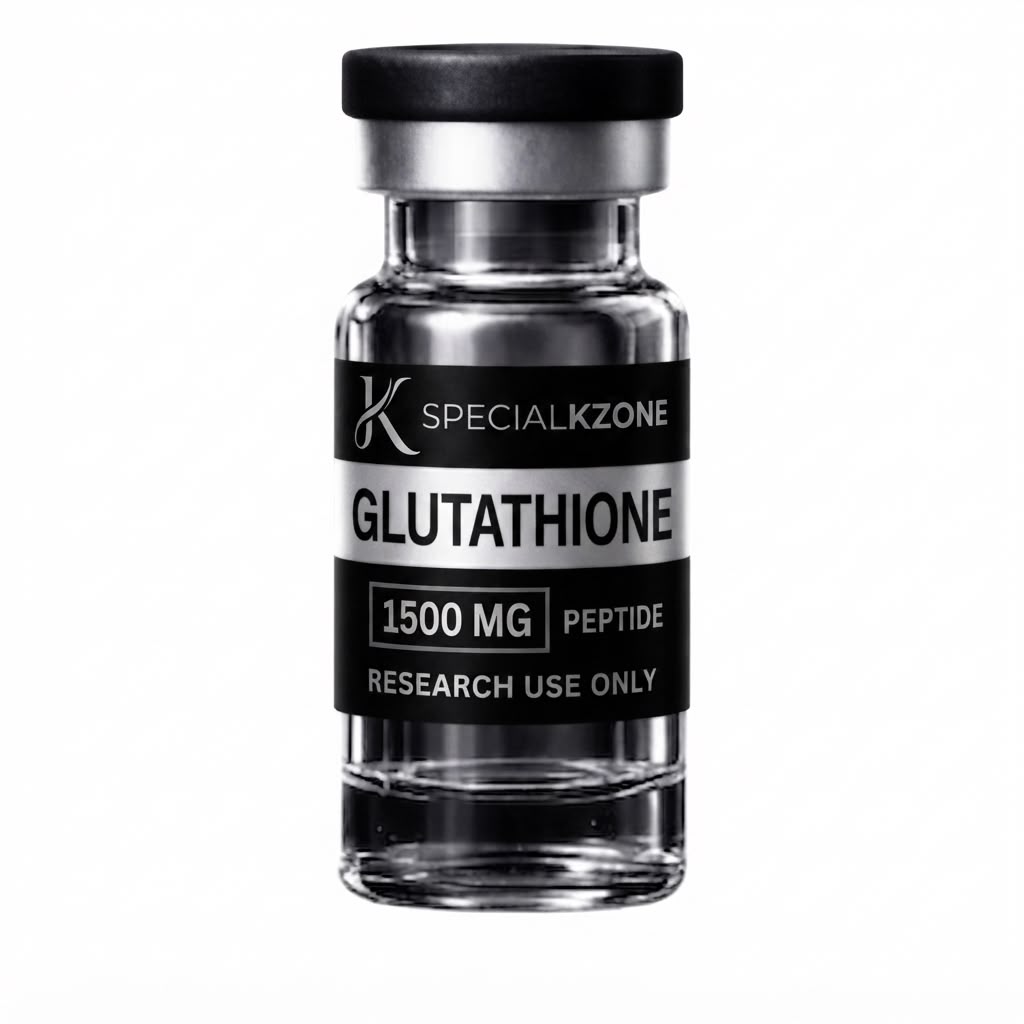
Glutathione is a research compound in lyophilized powder form for laboratory research, testing, and analytical applications.
-
Compound: Glutathione
-
Quantity: 600MG | 1500MG
-
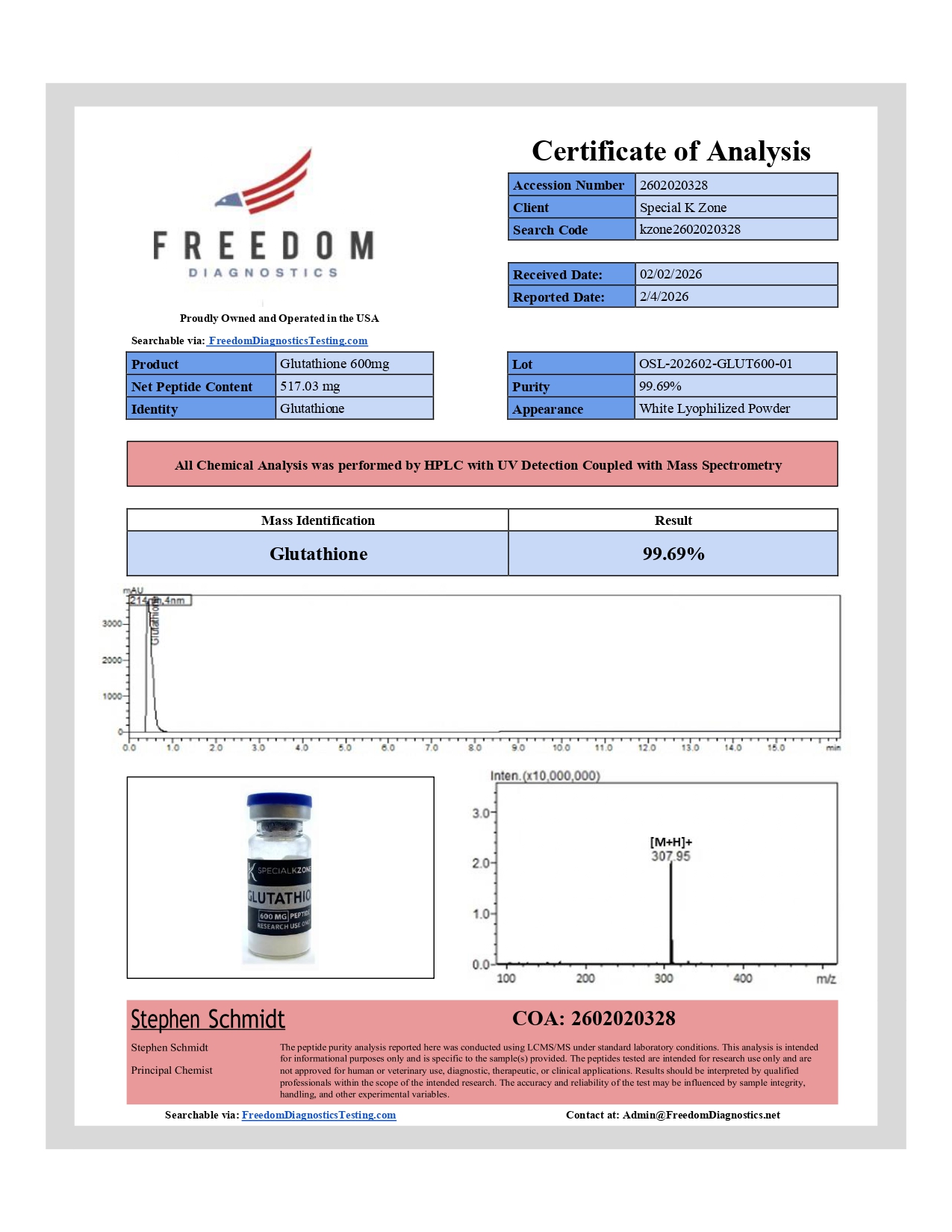
Purity: ≥99% (HPLC Certified)
-
Form: Lyophilized powder
-
Appearance: White to off-white powder
-
Solubility: Soluble in laboratory-grade sterile water
-
COA: Included in product image gallery
Reviews
There are no reviews yet.