GHK-Cu 50mg – Copper Tripeptide-1 for Advanced Tissue Regeneration Research
Intro Paragraph (250 words)
Our pharmaceutical-grade GHK-Cu (Glycyl-L-Histidyl-L-Lysine Copper) represents the gold standard in copper peptide research, delivering 50mg of high-purity Copper Tripeptide-1 for investigations into extracellular matrix remodeling, gene expression modulation, and dermal tissue engineering. Originally identified in human plasma and later recognized for its copper ion transport capabilities, GHK Copper Peptide has emerged as a critical research tool for laboratories studying wound healing acceleration, collagen synthesis upregulation, and age-related protein degradation pathways.
Unlike traditional growth factors or cytokine therapies, GHK-Cu operates through direct genetic modulation, influencing the expression of approximately 4,000 genes associated with tissue repair and regeneration. This tripeptide-copper complex (Cu²⁺-GHK) functions as a natural carrier of copper ions to cells, facilitating enzymatic processes essential for lysyl oxidase activation, elastin cross-linking, and vascular endothelial growth factor (VEGF) production. Our lyophilized Copper Peptide preparation ensures maximum stability of the copper-tripeptide bond, providing consistent research results for in-vitro dermal fibroblast studies, hair follicle research, and chronic wound modeling applications.
For cosmetic science researchers and dermatology laboratories, GHK-Cu 50mg offers unparalleled investigation opportunities into photoaging reversal mechanisms and barrier function restoration. The peptide’s ability to downregulate transforming growth factor-beta1 (TGF-beta1) while upregulating decorin and lumican makes it essential for studying scarless wound healing and anti-fibrotic tissue repair. When reconstituted with bacteriostatic water, this copper complex maintains biological activity for precise topical or systemic research protocols, distinguishing it from simpler copper salt preparations that lack the targeted cellular delivery mechanism of the tripeptide carrier.
The Biochemistry of GHK-Cu (Copper Tripeptide-1)
GHK-Cu is a naturally occurring copper complex of the tripeptide glycyl-L-histidyl-L-lysine, first isolated from human plasma albumin by Loren Pickart in 1973. The molecular structure features a glycine-histidine-lysine sequence that serves as a high-affinity copper (II) binding site, with the copper ion coordinated to the nitrogen atoms of the histidine imidazole ring and glycine amino group. This specific coordination chemistry gives GHK Copper Peptide its unique redox properties, allowing it to donate copper to cells while maintaining appropriate oxidative balance.
The copper-tripeptide complex (Cu²⁺-GHK) demonstrates remarkable biological stability compared to free copper ions, which typically generate reactive oxygen species through Fenton chemistry. By escorting copper into cells via specific transporters, GHK-Cu prevents oxidative damage while delivering essential cofactors for critical enzymes including cytochrome c oxidase, superoxide dismutase, and lysyl oxidase. This dual function—antioxidant protection combined with enzymatic activation—positions Copper Peptide research at the intersection of regenerative medicine and anti-aging science.
Research indicates that GHK-Cu levels decline significantly with age, dropping from approximately 200 ng/mL in young adult plasma to 80 ng/mL in elderly individuals. This age-dependent reduction correlates with decreased skin elasticity, impaired wound healing, and diminished hair follicle activity, providing the biological rationale for investigating exogenous GHK-Cu applications in age-related tissue degeneration studies.
Mechanisms of Action in Tissue Regeneration
Gene Expression Modulation:
The most significant research application for GHK-Cu lies in its ability to remodel gene expression profiles. Microarray studies demonstrate that this Copper Tripeptide upregulates 59% of genes involved in protein ubiquitination and proteasome function while downregulating 41% of genes associated with oxidative stress and inflammatory cytokine production. This genetic reprogramming capability makes GHK-Cu invaluable for studying cellular senescence reversal and proteostasis maintenance in aged tissues.
Extracellular Matrix Remodeling:
For dermatology research, GHK-Cu 50mg provides essential investigation tools for collagen and glycosaminoglycan synthesis studies. The peptide stimulates fibroblast production of collagen types I, II, and III while simultaneously increasing decorin and lumican synthesis—proteoglycans critical for collagen fibrillogenesis and proper skin architecture. Unlike BPC-157, which focuses primarily on angiogenesis and tendon healing, GHK-Cu specifically targets dermal matrix composition and epithelial-mesenchymal transition mechanisms.
Copper Ion Transport & Angiogenesis:
As a copper carrier, GHK-Cu delivers essential copper to hypoxic tissues, stimulating VEGF expression and endothelial cell proliferation. This angiogenic property differs from TB-500 (Thymosin Beta-4) mechanisms, offering complementary research pathways for investigators studying wound vascularization. The copper-dependent activation of lysyl oxidase further enhances cross-linking of collagen and elastin, providing structural integrity to healing wounds and aging skin models.
Anti-Inflammatory & Anti-Fibrotic Properties:
Research demonstrates that Copper Peptide suppresses tumor necrosis factor-alpha (TNF-alpha) and interleukin-6 (IL-6) production while increasing anti-inflammatory cytokines IL-4 and IL-10. Additionally, GHK-Cu inhibits TGF-beta1-induced fibroblast differentiation into myofibroblasts, presenting research opportunities for keloid and hypertrophic scar prevention studies.
Research Applications & Laboratory Protocols
Dermatology & Cosmetic Science:
The primary application for GHK-Cu research involves photoaging studies and barrier function restoration. Laboratories utilize this peptide to investigate:
- UV-induced matrix metalloproteinase (MMP) inhibition
- Dermal stem cell proliferation and migration
- Hair follicle cycling and anagen phase extension
- Sebaceous gland regulation and acne vulgaris models
- Transdermal penetration kinetics of copper complexes
Wound Healing & Tissue Engineering:
GHK-Cu accelerates wound closure through multiple synergistic pathways. Research protocols examine its role in diabetic wound models, burn healing acceleration, and surgical incision repair. The peptide’s ability to attract immune cells while simultaneously reducing chronic inflammation makes it superior to single-mechanism growth factors for complex wound environments.
Oncology & Anti-Cancer Research:
Emerging studies investigate GHK-Cu in cancer biology, focusing on its ability to suppress metastatic gene expression and inhibit DNA damage in healthy tissues during chemotherapy research. The peptide’s tissue protective properties offer research avenues for mitigating radiation-induced dermatitis and mucositis.
Neuroprotection & Cognitive Research:
Beyond dermatology, GHK-Cu crosses the blood-brain barrier, offering research applications in neurodegenerative disease models. Studies examine its neuroprotective effects against amyloid-beta toxicity and its ability to promote neurite outgrowth in nerve regeneration research.
Product Specifications & Quality Standards
- Chemical Name: Glycyl-L-Histidyl-L-Lysine Copper (II) Complex
- Synonyms: Copper Peptide-1, Copper Tripeptide, GHK-Cu
- Molecular Formula: C₁₄H₂₄CuN₆O₄
- Molecular Weight: 403.92 g/mol
- Copper Content: Approximately 15-16% by weight
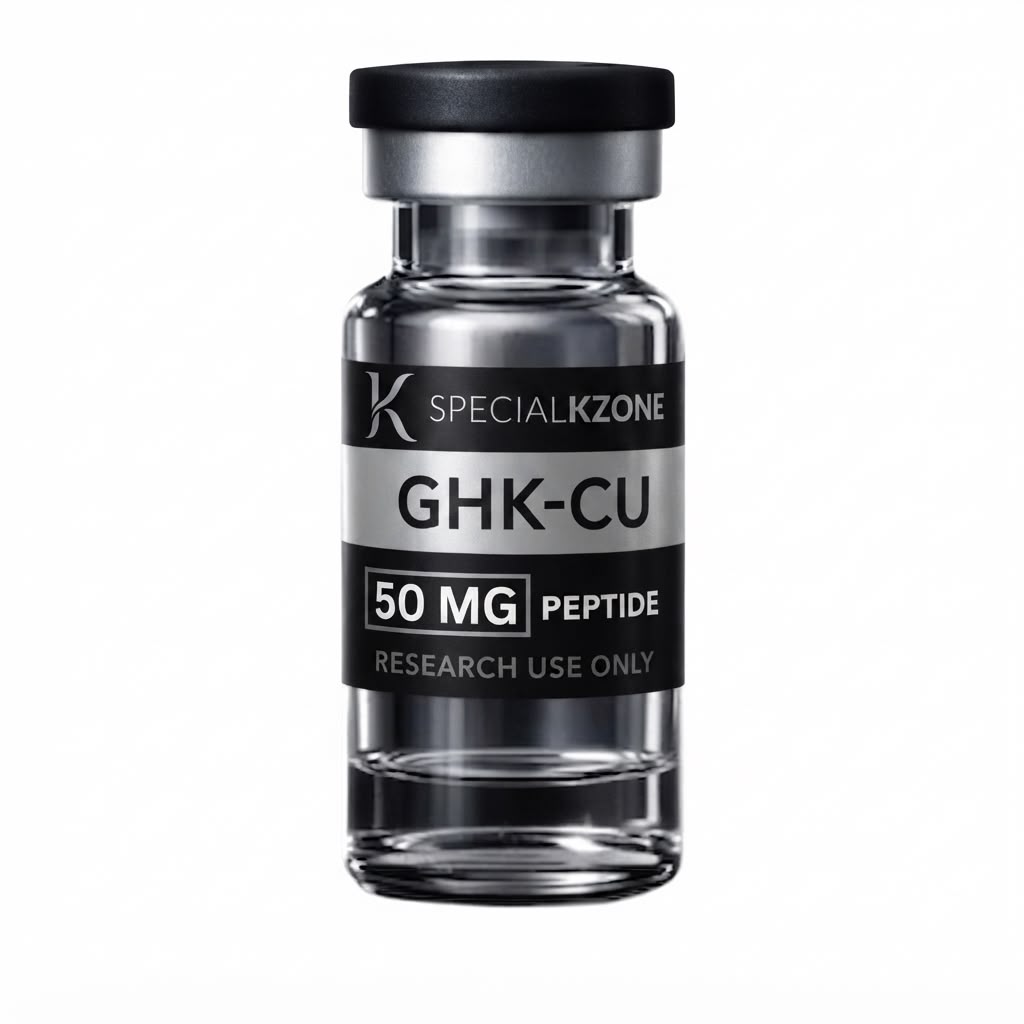
- Total Peptide Content: 50mg per vial (lyophilized powder)
- Appearance: Blue-violet crystalline powder (characteristic copper complex color)
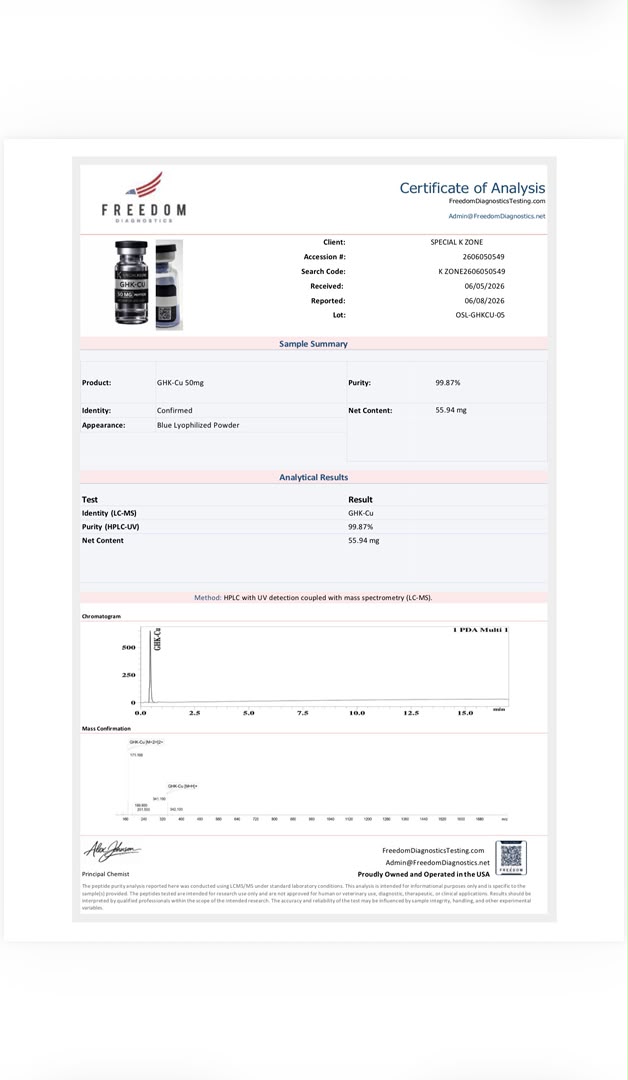
- Purity: ≥99% (HPLC verified, copper content confirmed by ICP-MS)
- Peptide Content: ≥98% (amino acid analysis)
- Solubility: Soluble in water, saline, and bacteriostatic water (forms characteristic blue solution)
- Storage: -20°C stable (lyophilized), 2-8°C after reconstitution
- Shelf Life: 24 months unopened, 14 days after reconstitution
Reconstitution & Preparation Guidelines
For optimal research preparation, reconstitute GHK-Cu 50mg with 2-5ml of bacteriostatic water to create a 10-25mg/ml stock solution. The characteristic blue color indicates proper copper-peptide complex integrity; clear or colorless solutions suggest copper dissociation and degradation.
Critical Preparation Notes:
- Use non-metal needles and syringes (plastic/polypropylene) when handling Copper Peptide solutions to prevent copper chelation or redox reactions with metal ions
- Maintain pH between 6.0-7.0 for maximum stability; acidic conditions below pH 5.0 cause copper release and peptide hydrolysis
- Avoid simultaneous preparation with strong antioxidants like ascorbic acid, which can reduce Cu²⁺ to Cu⁺ and compromise complex stability
- Store reconstituted solution in amber vials to prevent photodegradation of the copper-histidine complex
Research Concentrations:
- In-vitro fibroblast studies: 1-10 ng/ml (nanomolar range)
- Wound healing models: 10-100 ng/ml
- Hair follicle research: 0.5-5 ng/ml
- Penetration studies: 100-500 ng/ml in appropriate vehicles
Comparative Analysis: GHK-Cu vs. Other Regenerative Peptides
While BPC-157 and TB-500 dominate musculoskeletal healing research, GHK-Cu specifically targets epithelial and dermal regeneration through distinct biochemical pathways. BPC-157 primarily influences nitric oxide signaling and growth factor expression, whereas GHK-Cu operates at the transcriptional level, remodeling genetic expression patterns associated with aging.
Compared to epidermal growth factor (EGF) or fibroblast growth factor (FGF), GHK-Cu offers superior tissue penetration due to its small tripeptide structure (340 Daltons) compared to large protein growth factors (6,000+ Daltons). This molecular weight advantage allows Copper Peptide research to investigate intracellular mechanisms inaccessible to larger cytokines.
Unlike CJC-1295 or growth hormone secretagogues that indirectly influence tissue repair through endocrine pathways, GHK-Cu provides direct cellular signaling, making it ideal for localized wound healing studies without systemic hormonal confounders.
Storage, Stability & Handling Protocols
The copper-tripeptide complex requires specific storage conditions to maintain the coordination bond integrity. Lyophilized GHK-Cu powder exhibits excellent stability at -20°C for 24 months, with minimal copper oxidation or peptide degradation. However, improper storage leads to characteristic color changes:
- Intact Complex: Blue-violet powder/solution
- Copper Released: Greenish or pale blue (indicates degradation)
- Oxidized Peptide: Brown or yellow discoloration
Handling Requirements:
- Use powder-free nitrile gloves to prevent contamination with zinc or other metal ions that compete for binding sites
- Prepare solutions in borosilicate glass or high-grade polypropylene containers; avoid standard metals which catalyze copper redox reactions
- When combining with other research peptides, add GHK-Cu last to prevent metal-catalyzed oxidation of methionine or cysteine-containing sequences (such as in some growth hormone secretagogues)
Frequently Asked Research Questions
What concentration of GHK-Cu is optimal for cell culture research?
Most in-vitro dermatology studies utilize GHK-Cu concentrations between 0.5-10 ng/ml. Higher concentrations (100+ ng/ml) may demonstrate cytotoxic effects through copper overload, making dose-response curve establishment critical for protocol design.
Can GHK-Cu be combined with retinoids or acids in research formulations?
Acidic environments (pH < 5.5) destabilize the copper-tripeptide complex, releasing free copper ions that may generate oxidative stress. For combination studies with acidic compounds, maintain separate application timelines or buffer systems to preserve Copper Peptide integrity.
How does GHK-Cu differ from simple copper sulfate or copper chloride?
Free copper salts exhibit poor bioavailability and significant oxidative toxicity. The GHK carrier acts as a chaperone, delivering copper specifically to cells expressing copper transporters (CTR1) while preventing non-specific oxidative damage to membranes and proteins.
Is the blue color of GHK-Cu solutions indicative of purity?
Yes, the characteristic azure or royal blue color indicates intact Cu²⁺-GHK coordination. Colorless solutions suggest dissociation, while green hues indicate copper carbonate formation from atmospheric CO₂ exposure. Always verify spectrophotometric absorption at 595nm for quality confirmation.
What is the shelf life after reconstitution?
Reconstituted GHK-Cu maintains research integrity for 10-14 days refrigerated at 2-8°C when prepared with bacteriostatic water. For extended studies, prepare fresh aliquots every 7 days to ensure copper-peptide complex stability.
GHK-Cu is a research compound in lyophilized powder form for laboratory research, testing, and analytical applications.
-
Compound: GHK-Cu
-
Quantity: 50 mg
-
Purity: ≥99% (HPLC Certified)
-
Form: Lyophilized powder
-
Appearance: White to off-white powder
-
Solubility: Soluble in laboratory-grade sterile water
-
COA: Included in product image gallery
Reviews
There are no reviews yet.