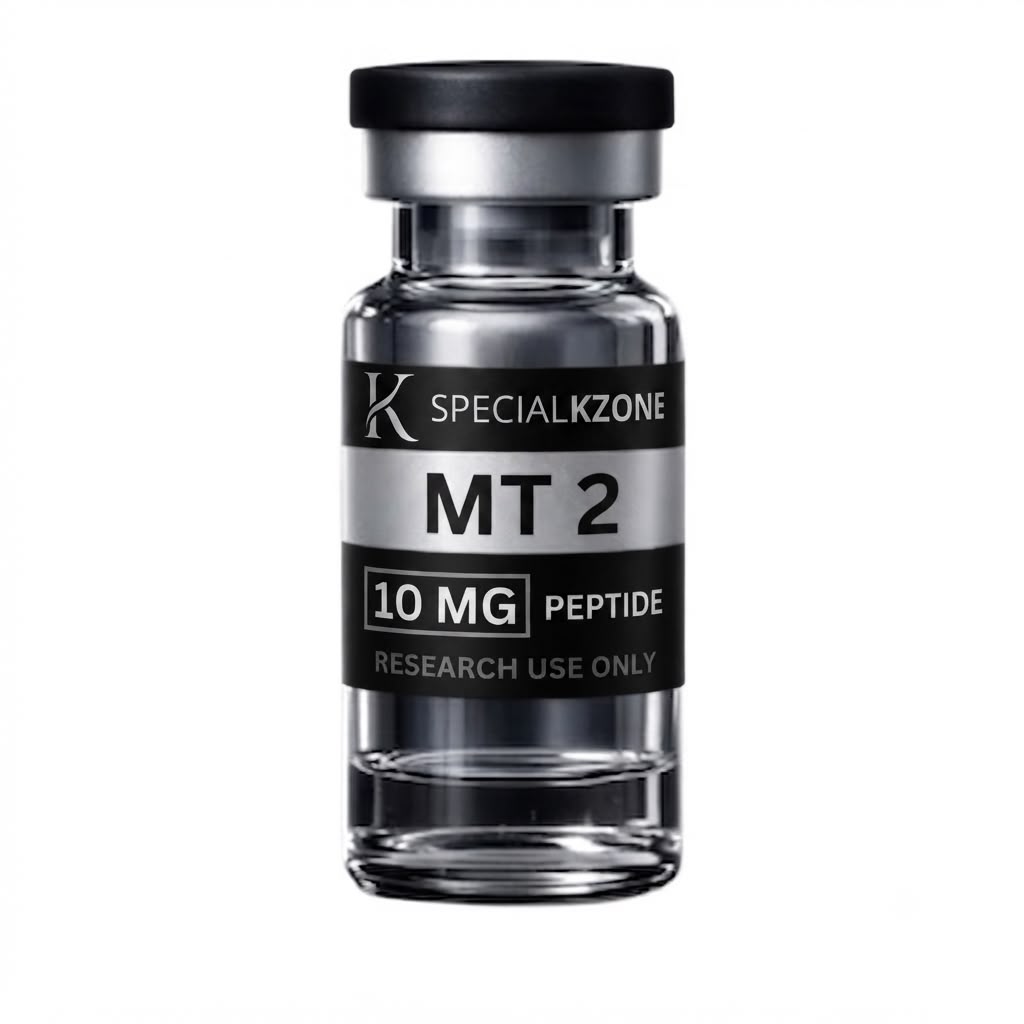
Melanotan 2 (MT-II) 10mg – Multi-Receptor Melanocortin for Metabolic & Behavioral Research
Our pharmaceutical-grade Melanotan 2 (MT-II) delivers the cyclic heptapeptide (Ac-Nle-cyclo[Asp-His-D-Phe-Arg-Trp-Lys]-NH₂) that revolutionized melanocortin research by demonstrating that a compact lactam-bridged structure could activate multiple receptor subtypes with high potency. Unlike the linear structure of [Melanotan 1 (Afamelanotide)](https://specialkzone.com/product/melanotan-1/), which selectively targets MC1R for photoprotection, Melanotan 2 functions as a pan-melanocortin agonist with robust affinity for MC1R (melanogenesis), MC3R (energy homeostasis), MC4R (appetite/sexual function), and MC5R (sebaceous/exocrine tissues). This multi-receptor profile makes MT-II indispensable for research into the integrated physiology of energy regulation, sexual behavior, and cutaneous pigmentation—areas where single-receptor ligands fail to capture the complex interplay of melanocortin signaling.
Originally synthesized as a potential tanning agent, Melanotan 2 revealed unexpected central nervous system activity that redirected research toward metabolic syndrome, sexual dysfunction, and neuropharmacology. The cyclic structure, formed by an amide bond between Asp2 and Lys7, creates a rigid conformation that resists proteolytic degradation while maintaining receptor affinity 1000-fold greater than linear fragments. When reconstituted with [bacteriostatic water](#], this 10mg preparation enables investigation into the “Bremelanotide” mechanism—showing how peripheral melanocortin administration can trigger central nervous system responses through circumventricular organ penetration and hypothalamic activation.
For endocrinology researchers and behavioral pharmacologists, Melanotan 2 offers a unique probe for dissociating the metabolic effects of melanocortins from their pigmentary actions, while simultaneously studying how energy status (leptin/ghrelin) interfaces with reproductive behavior through shared MC4R pathways.
Multi-Receptor Pharmacology & Central-Peripheral Integration
Melanotan 2 (molecular weight 1,024.2 Da) exhibits a binding profile distinct from [Melanotan 1](#]: while both stimulate melanogenesis through MC1R, MT-II additionally activates MC3R and MC4R in the hypothalamus, brainstem, and spinal cord. The MC4R activation proves particularly significant, as this receptor subtype mediates both anorexigenic (appetite-suppressing) and pro-sexual effects through distinct neuronal populations in the paraventricular nucleus (PVN) and medial preoptic area (MPOA).
Metabolic & Appetite Research:
MC3R/MC4R activation by MT-II stimulates sympathetic nervous system output, increasing energy expenditure through brown adipose tissue (BAT) thermogenesis and promoting lipolysis in white adipose tissue. Research indicates that Melanotan 2 reduces food intake without the nausea or aversive effects of GLP-1 agonists, making it valuable for investigating “clean” anorexia—appetite suppression without malaise. Studies examine whether melanocortin-induced satiety can override leptin resistance in obesity models, potentially bypassing the blood-brain barrier limitations that compromise leptin therapy.
Sexual Behavior & Arousal:
The pro-sexual effects of MT-II occur through MC4R activation in the MPOA and ventromedial hypothalamus, increasing dopaminergic tone in the mesolimbic pathway and enhancing sensory processing of sexual stimuli. Unlike phosphodiesterase inhibitors that target vascular mechanics, MT-II research investigates psychogenic arousal—the cognitive/emotional components of sexual response—making it the precursor to Bremelanotide (PT-141) development for female sexual interest/arousal disorder (FSIAD) and erectile dysfunction research.
Cutaneous Effects:
While [Melanotan 1](#] provides gradual, uniform eumelanin induction, Melanotan 2 produces more rapid pigmentation with potential for freckling or uneven distribution due to additional MC5R activation on sebaceous glands and MC1R superactivation. Research compares the cosmetic versus therapeutic tanning profiles of these analogs, examining whether MT-II’s faster onset correlates with different melanin distribution patterns or DNA photoprotection efficacy.
Research Applications & Laboratory Models
Metabolic Syndrome & Obesity:
Melanotan 2 research focuses on MC4R agonism as a treatment for leptin-resistant obesity. Unlike [CJC-1295 No DAC](#], which influences metabolism through the GH/IGF-1 axis and lipolysis, MT-II directly targets hypothalamic energy balance circuits, increasing satiety and basal metabolic rate simultaneously. Research protocols examine dose-dependent reductions in adiposity, improvements in insulin sensitivity, and changes in lipid profiles independent of food intake reduction.
Sexual Dysfunction Models:
The peptide serves as the research standard for investigating central sexual arousal mechanisms. Studies utilize MT-II to distinguish vascular erectile dysfunction (peripheral) from psychogenic/hypoactive sexual desire (central), offering insights into how melanocortin signaling interfaces with oxytocin, dopamine, and nitric oxide pathways. Research extends to female models, where MT-II demonstrates unique efficacy in restoring lordosis behavior and solicitation behaviors in ovariectomized models through spinal cord MC4R activation.
Tanning & Photoproduction Research:
While [Melanotan 1](#] remains the clinical standard for EPP, Melanotan 2 offers research advantages in studying rapid melanogenesis kinetics and the threshold between photoprotection and melanocytic stress. The peptide’s shorter half-life and higher receptor affinity allow for investigation into acute versus chronic melanin induction, including studies on melanosome transfer efficiency and keratinocyte melanin retention.
Autonomic & Cardiovascular Studies:
MC4R activation influences sympathetic tone, potentially affecting heart rate, blood pressure, and thermoregulation. MT-II research examines baroreceptor sensitivity and autonomic balance, particularly relevant for models of autonomic dysfunction or metabolic syndrome where sympathetic overactivity correlates with cardiovascular risk.
Product Specifications & Analytical Verification
- Chemical Name: Melanotan II; [Nle⁴, D-Phe⁷]-α-MSH(4-10)-lactam
- Sequence: Ac-Nle-cyclo[Asp-His-D-Phe-Arg-Trp-Lys]-NH₂
- Structure: Cyclic heptapeptide (Asp-Lys lactam bridge)
- Molecular Formula: C₅₀H₆₉N₁₅O₉
- Molecular Weight: 1,024.18 g/mol
- Total Content: 10mg per vial (lyophilized powder)
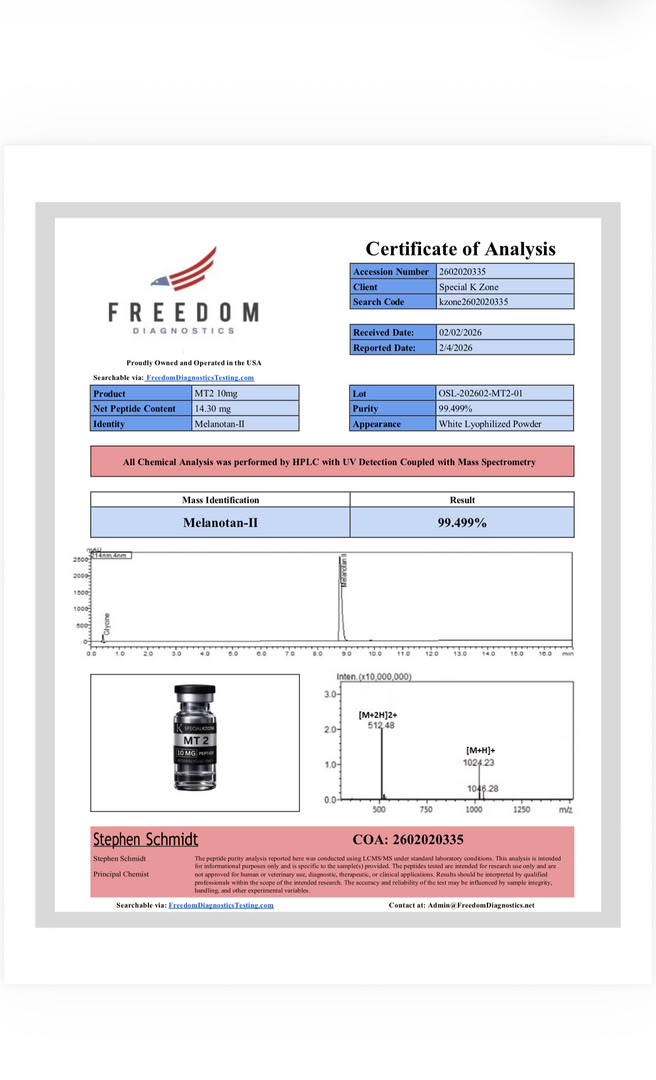
- Purity: ≥99% (HPLC verified)
- Appearance: White to off-white lyophilized powder
- Solubility: Soluble in aqueous solutions, optimal in slightly acidic pH (5-6)
- Storage: -20°C stable (lyophilized), 2-8°C after reconstitution
- Reconstituted Stability: 7-14 days at 2-8°C when prepared with preservatives
Quality Control:
Each batch analyzed via mass spectrometry for correct cyclic structure (expected m/z 1025.2 [M+H]+), verifying the presence of the critical lactam bond. Circular dichroism spectroscopy confirms the beta-turn conformation necessary for high-affinity MC4R binding. Purity confirmed through RP-HPLC with UV detection at 214nm.
Reconstitution & Research Methodologies
Preparation Guidelines:
Reconstitute Melanotan 2 10mg with 1-2ml of bacteriostatic water containing 0.6% acetic acid to create a 5-10mg/ml stock solution at pH ~5.0. The cyclic structure tolerates slight acidity better than linear peptides, and the acetic acid prevents oxidation of the tryptophan residue. Neutralize with phosphate buffer immediately before in-vivo administration to prevent injection site irritation.
Handling Considerations:
The compact cyclic structure of MT-II resists aggregation better than larger peptides like [IGF-1 LR3](#], but light sensitivity remains a concern due to the tryptophan residue. Store reconstituted solutions in amber vials or aluminum foil-wrapped containers. Unlike [GHK-Cu](#], which requires metal-ion avoidance, MT-II tolerates standard laboratory plastics and glassware.
Dosing Parameters:
Research concentrations typically range from 0.025-0.1 mg/kg body weight in rodent models for tanning studies, and 0.5-2 mg/kg for metabolic/behavioral research (due to blood-brain barrier penetration requirements). The short half-life (approximately 30-60 minutes) necessitates 1-2x daily administration for sustained receptor occupancy in chronic studies.
Route Considerations:
Subcutaneous administration is standard for peripheral effects (tanning, lipolysis). For central nervous system research (appetite, sexual behavior), intracerebroventricular (ICV) or intranasal administration may be employed to bypass peripheral receptor saturation and achieve hypothalamic concentrations with lower systemic doses.
Comparative Pharmacology: Melanotan 2 vs. Alternative Compounds
Melanotan 2 vs. Melanotan 1:
[Melanotan 1](#] (Afamelanotide) offers MC1R selectivity for pure photoprotection research without central side effects. Melanotan 2 provides the multi-receptor activation necessary for studying melanocortin effects on metabolism, appetite, and behavior. Researchers choose MT-II when investigating integrated physiological responses; MT-I when isolating cutaneous photoprotection.
Melanotan 2 vs. CJC-1295/Ipamorelin:
While [CJC-1295 No DAC](#] and growth hormone secretagogues influence body composition through the somatotropic axis, Melanotan 2 operates through the melanocortin system, affecting appetite and energy expenditure independently of GH release. Research comparing these pathways examines whether metabolic improvement requires anabolic hormone elevation or can be achieved through central satiety mechanisms alone.
Melanotan 2 vs. Bremelanotide:
Bremelanotide (PT-141) is the metabolically stable analog of Melanotan 2 developed specifically for sexual dysfunction, lacking the C-terminal amide modification. MT-II serves as the parent compound for understanding structure-activity relationships in melanocortin-based sexual dysfunction therapies.
Safety Considerations & Research Limitations
Side Effect Profile:
Research utilizing Melanotan 2 must account for predictable side effects distinct from [Melanotan 1](#]: nausea (via area postrema MC4R activation), facial flushing (sympathetic activation), yawning/stretching (central MC4R effects), and spontaneous erections or sexual arousal (hypothalamic MC4R). These effects, while indicative of successful CNS penetration, require blinding procedures in behavioral studies to prevent subjective bias.
Cardiovascular Monitoring:
MC4R activation can increase heart rate and blood pressure through sympathetic stimulation. Research protocols should include cardiovascular monitoring, particularly when investigating high-dose metabolic effects or when combining MT-II with other sympathomimetic agents.
Melanocytic Considerations:
As with all melanogenic agents, prolonged MT-II administration requires monitoring for melanocytic activation. The rapid melanin induction may obscure early detection of atypical pigmentation compared to the gradual tanning induced by [Melanotan 1](#].
Frequently Asked Research Questions
How does Melanotan 2 differ from Bremelanotide (PT-141)?
Bremelanotide is a metabolically modified analog of Melanotan 2 with enhanced stability for sexual dysfunction research. MT-II offers shorter half-life and broader receptor profile, making it suitable for studying the full spectrum of melanocortin effects rather than just sexual arousal.
Why does MT-II cause nausea while MT-I does not?
The MC4R activation by Melanotan 2 (absent in MC1R-selective MT-I) stimulates receptors in the area postrema of the medulla, a chemoreceptive trigger zone for vomiting. This side effect correlates with CNS penetration and dose, often diminishing with repeated administration (tolerance).
Can Melanotan 2 be used for weight loss research without tanning?
While possible, the melanogenic effects are inseparable from the metabolic effects at standard doses due to concurrent MC1R and MC4R activation. Research investigating “tan-free” metabolic effects would require MC4R-selective analogs rather than MT-II.
What is the onset of action for behavioral effects?
Appetite suppression and sexual arousal typically manifest within 30-60 minutes of administration, peaking at 2-4 hours, and resolving within 8-12 hours—mirroring the plasma half-life and receptor internalization kinetics.
How does this compare to GLP-1 for appetite research?
While [GLP-3 RT](#] (and GLP-1 analogs) reduce appetite through gastric emptying delay and visceral malaise, Melanotan 2 produces “clean” satiety without gastrointestinal distress, offering research insights into the qualitative differences between aversive versus homeostatic appetite suppression.
Melanotan 2 is a research compound in lyophilized powder form for laboratory research, testing, and analytical applications.
-
Compound: Melanotan 2
-
Quantity: 10 mg
-
Purity: ≥99% (HPLC Certified)
-
Form: Lyophilized powder
-
Appearance: White to off-white powder
-
Solubility: Soluble in laboratory-grade sterile water
-
COA: Included in product image gallery

Reviews
There are no reviews yet.