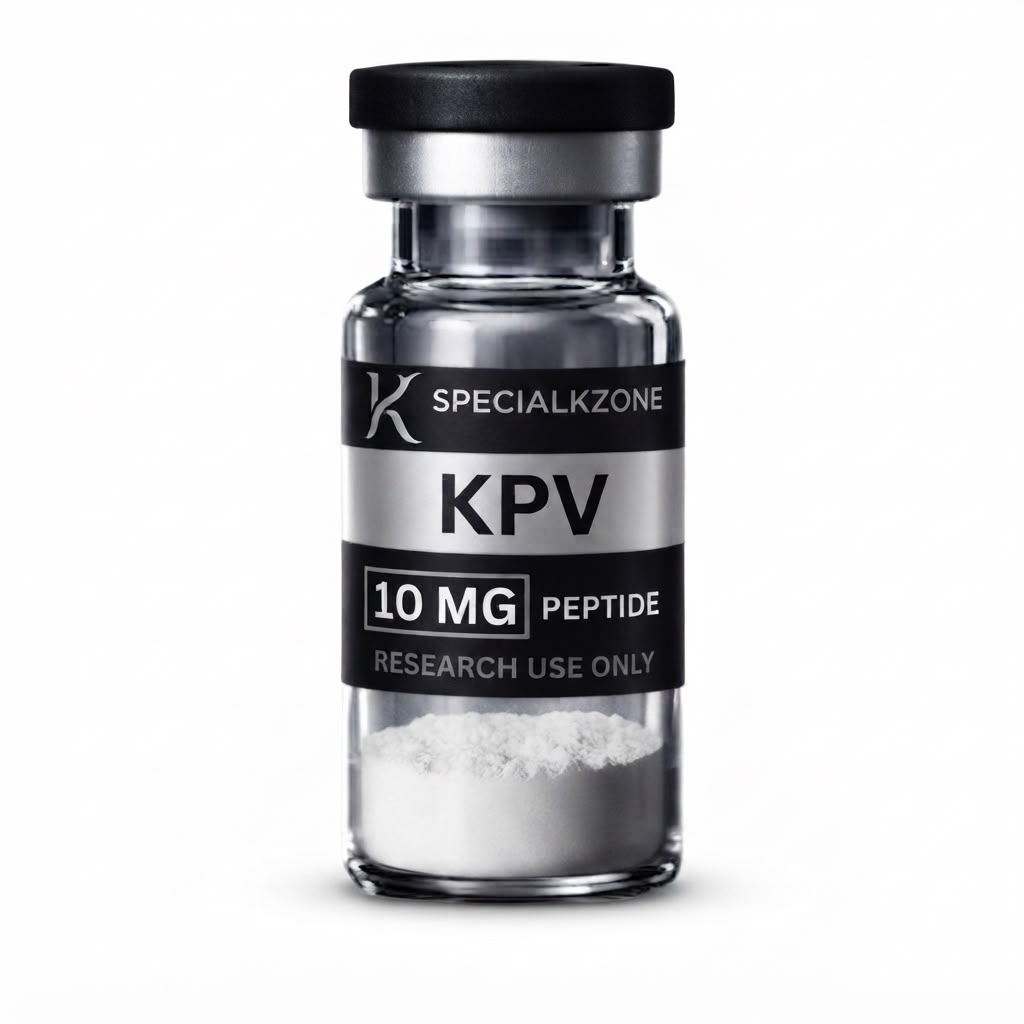
KPV 10mg – Lys-Pro-Val Tripeptide for Anti-Inflammatory & Immunomodulatory Research
Our pharmaceutical-grade KPV delivers the minimal bioactive sequence of alpha-melanocyte stimulating hormone (α-MSH), presenting a revolutionary approach to anti-inflammatory research through the simplest possible peptide structure—Lysine-Proline-Valine. Unlike full-length melanocortins such as Melanotan I (Afamelanotide) or Melanotan II which stimulate pigmentation and central nervous system pathways, KPV (α-MSH 11-13) retains potent immunomodulatory and anti-inflammatory properties while completely eliminating melanotropic, corticotropic, and cardiovascular effects. This 10mg lyophilized preparation provides researchers with a highly specific tool for investigating inflammatory bowel disease (IBD), psoriasis, allergic contact dermatitis, and systemic inflammation without the confounding variables of skin darkening, appetite modulation, or blood pressure changes associated with larger melanocortin analogs.
The Lys-Pro-Val tripeptide represents the C-terminal sequence of α-MSH that specifically interacts with melanocortin receptors on immune cells and intestinal epithelium rather than melanocytes. Research demonstrates that KPV inhibits nuclear factor-kappa B (NF-κB) activation, reduces pro-inflammatory cytokine production (TNF-α, IL-1β, IL-6), and accelerates mucosal healing through mechanisms distinct from both steroid anti-inflammatories and structural repair peptides like BPC-157. When reconstituted with bacteriostatic water, this minimal peptide offers superior tissue penetration, metabolic stability, and receptor accessibility compared to larger protein therapeutics, making it ideal for studying the intersection of neuroendocrine immunology and gut barrier function.
For laboratories investigating the “cholinergic anti-inflammatory pathway,” cytokine storm modulation, or the specific resolution of chronic inflammatory conditions without immunosuppression, KPV provides a molecular scalpel rather than a pharmacological hammer—preserving immune surveillance while terminating inappropriate inflammatory signaling.
Structural Minimalism & Mechanistic Advantages
KPV (molecular weight 342.43 Da) represents the ultimate reduction of melanocortin biology to its essential anti-inflammatory core. As the C-terminal tripeptide of α-MSH (residues 11-13), it lacks the N-terminal and central domains required for melanocortin receptor (MC1R/MC4R) activation in melanocytes and neurons, yet retains affinity for MC1R and MC3R expressed on macrophages, dendritic cells, neutrophils, and intestinal epithelial cells. This selective receptor distribution explains KPV’s ability to modulate immune function without pigmentation side effects.
NF-κB Inhibition Pathway:
The primary mechanism involves suppression of the IκB kinase (IKK) complex, preventing the phosphorylation and degradation of IκBα—the inhibitor that sequesters NF-κB in the cytoplasm. By maintaining IκBα integrity, KPV prevents nuclear translocation of NF-κB p65/p50 dimers, thereby silencing transcription of TNF-α, IL-1β, IL-6, inducible nitric oxide synthase (iNOS), and cyclooxygenase-2 (COX-2). This mechanism differs fundamentally from corticosteroids (which upregulate IκBα synthesis) and NSAIDs (which inhibit COX enzymatically), offering a third distinct pathway for inflammatory resolution research.
Immune Cell Modulation:
Lys-Pro-Val research demonstrates selective effects on immune effector cells. In macrophage models, it promotes the M2 (anti-inflammatory, tissue-reparative) phenotype over M1 (pro-inflammatory, microbicidal) polarization. In neutrophils, it accelerates apoptosis and clearance (efferocytosis), preventing the secondary tissue damage associated with necrotic neutrophil lysis. For T-cell research, KPV appears to favor regulatory T-cell (Treg) expansion over Th1/Th17 effector responses, suggesting applications in autoimmune research where immune tolerance restoration proves superior to broad immunosuppression.
Intestinal Barrier Enhancement:
Unlike systemic anti-inflammatories, KPV demonstrates tropism for intestinal mucosa, upregulating tight junction proteins (occludin, claudin-1, ZO-1) and reducing epithelial permeability. This “barrier repair” function complements its anti-inflammatory effects, addressing both the cause (bacterial translocation) and consequence (cytokine release) of intestinal inflammation—a dual mechanism not observed with simple immunosuppressants or growth factors like [BPC-157](https://specialkzone.com/product/bpc-157/) alone.
Research Applications & Therapeutic Models
Inflammatory Bowel Disease (IBD) Research:
The premier application for KPV involves ulcerative colitis and Crohn’s disease models. Research indicates that oral or rectal administration of KPV reduces histological inflammation scores, decreases myeloperoxidase activity (neutrophil infiltration marker), and promotes mucosal healing more effectively than 5-aminosalicylic acid in animal models. Unlike [GLP-2 TZ](#], which stimulates intestinal growth but does not directly suppress inflammation, KPV addresses the immunological etiology of IBD while simultaneously enhancing barrier function—a dual approach that may prove synergistic with structural healing peptides.
Dermatological Inflammation:
For psoriasis, atopic dermatitis, and allergic contact dermatitis research, KPV offers investigation into steroid-sparing anti-inflammatory strategies. The tripeptide reduces keratinocyte hyperproliferation and inflammatory cytokine expression in skin models without the skin atrophy, telangiectasia, or hypothalamic-pituitary-adrenal axis suppression associated with topical corticosteroids. Research compares KPV to calcineurin inhibitors (tacrolimus, pimecrolimus) and vitamin D analogs for efficacy and safety profiles.
Wound Healing & Tissue Repair:
While [BPC-157](https://specialkzone.com/product/bpc-157/) dominates angiogenesis-based healing research, KPV addresses the inflammatory phase of wound healing—the critical transition from neutrophil-dominated debridement to macrophage-mediated regeneration. By accelerating the inflammatory resolution phase, KPV research investigates whether timely inflammation termination prevents chronic wounds, hypertrophic scarring, and fibrosis. Studies focus on diabetic wound models where persistent inflammation characterizes non-healing ulcers.
Systemic Inflammation & Sepsis:
The “cytokine storm” of sepsis represents uncontrolled systemic inflammation. KPV research examines whether melanocortin-derived peptides can modulate the cholinergic anti-inflammatory pathway (via the vagus nerve and nicotinic acetylcholine receptors) to prevent lethal endotoxemia. Unlike broad immunosuppressants that increase infection susceptibility, KPV appears to maintain pathogen clearance while preventing collateral tissue damage.
Autoimmune Disorders:
Research applications extend to rheumatoid arthritis (collagen-induced arthritis models), multiple sclerosis (experimental autoimmune encephalomyelitis), and type 1 diabetes (NOD mouse models), investigating whether KPV can restore immune tolerance without the global immunosuppression required by conventional disease-modifying antirheumatic drugs (DMARDs) or biologics.
Product Specifications & Analytical Data
- Chemical Name: KPV; Lysyl-Prolyl-Valine; α-MSH (11-13)
- Sequence: Lys-Pro-Val (Lysine-Proline-Valine)
- Molecular Formula: C₁₆H₃₀N₄O₄
- Molecular Weight: 342.43 g/mol
- Total Content: 10mg per vial (lyophilized powder)
- Structure: Linear tripeptide (C-terminal fragment of α-MSH)
- Purity: ≥99% (HPLC verified)
- Appearance: White to off-white crystalline powder
- Solubility: Highly soluble in water and aqueous buffers (>50mg/ml)
- Storage: -20°C stable (lyophilized), 2-8°C after reconstitution
- Reconstituted Stability: 14-21 days refrigerated when prepared with preservatives
- Isoelectric Point: ~9.5 (basic due to lysine side chain)
Quality Verification:
Each batch analyzed by mass spectrometry for correct molecular weight (343.2 [M+H]+) and absence of dipeptide contaminants (Lys-Pro or Pro-Val). Purity confirmed via reverse-phase HPLC with UV detection at 214nm. Biological activity verified through NF-κB reporter gene assays in LPS-stimulated macrophage cell lines.
Reconstitution, Administration & Protocol Optimization
Preparation Guidelines:
Reconstitute KPV 10mg with 2-5ml of bacteriostatic water to create a 2-5mg/ml stock solution. As a small tripeptide, KPV exhibits exceptional aqueous solubility without requiring acidic buffers or organic co-solvents. The proline residue confers resistance to standard peptidases, though the N-terminal lysine remains susceptible to aminopeptidases—consider acetylation or amidation modifications if oral bioavailability research is intended.
Route of Administration Research:
KPV demonstrates activity via multiple routes:
- Oral/Enteral: Survives gastric transit better than larger peptides; investigated for topical intestinal delivery in IBD
- Subcutaneous/Intraperitoneal: Standard systemic administration for systemic inflammation models
- Topical: Penetrates stratum corneum for dermatological research due to small size and lipophilic proline residue
- Rectal: Enema formulations for distal colitis research
Dosing Parameters:
Research concentrations typically range from 0.1-1 mg/kg body weight in rodent models, administered once or twice daily. For IBD research, higher local concentrations (topical or rectal) may achieve mucosal effects with minimal systemic exposure. The short plasma half-life (~2-4 hours) requires divided dosing for sustained anti-inflammatory effects, though the biological effects on gene expression may persist 24+ hours due to NF-κB pathway modulation.
Combination Research:
Studies often combine KPV with structural repair peptides like [BPC-157](https://specialkzone.com/product/bpc-157/) to investigate whether anti-inflammatory preconditioning accelerates subsequent tissue remodeling. The combination addresses both the inflammatory insult and the structural damage, potentially offering superior outcomes in complex wound or IBD models compared to single-agent protocols.
Comparative Analysis: KPV vs. Alternative Anti-Inflammatories
KPV vs. BPC-157:
While both peptides address gut health and wound healing, [BPC-157](https://specialkzone.com/product/bpc-157/) primarily stimulates angiogenesis, growth factor expression, and extracellular matrix deposition—essentially “building” new tissue. KPV stops the inflammatory destruction of existing tissue and prevents further immune-mediated damage. Research comparing these approaches—or combining them—investigates whether inflammation resolution must precede structural repair for optimal outcomes, or whether simultaneous administration provides synergistic benefits.
KPV vs. Melanotan I/II:
Unlike [Melanotan I (Afamelanotide)](#] or [Melanotan II](#], which contain the KPV sequence within their larger structures but primarily activate melanogenesis through MC1R on melanocytes, isolated KPV specifically targets immune cell MC receptors without skin darkening. This represents a “de-risked” melanocortin approach for inflammation research where pigmentation would confound study results or be cosmetically unacceptable in clinical translation models.
KPV vs. Traditional Anti-Inflammatories:
Compared to corticosteroids, KPV does not cause immunosuppression, metabolic derangement, or tissue atrophy. Compared to NSAIDs, it does not inhibit COX enzymes or cause gastric ulceration (it actually protects gastric mucosa). Compared to biologic TNF-α inhibitors, it is small, stable, inexpensive, and lacks immunogenicity risks. These distinctions make KPV a research candidate for “soft” anti-inflammatory approaches in chronic conditions.
Stability, Storage & Handling Considerations
As a minimal tripeptide, KPV exhibits superior stability compared to larger therapeutic proteins. The absence of cysteine residues eliminates disulfide bond scrambling concerns present in [IGF-1 LR3](#] or GHK-Cu. The proline residue provides conformational stability against proteolysis, while the C-terminal valine (as free acid or amide, depending on synthesis) influences metabolic stability.
Storage Protocols:
Lyophilized KPV remains stable for 24+ months at -20°C without significant degradation. Unlike larger peptides requiring strict avoidance of freeze-thaw cycles, KPV tolerates multiple reconstitution cycles better due to its chemical stability, though single-use aliquoting remains best practice. Reconstituted solutions maintain activity for 2-3 weeks refrigerated when prepared with bacteriostatic water containing 0.9% benzyl alcohol.
Handling Advantages:
The small size and high solubility of KPV simplify laboratory handling compared to aggregation-prone proteins. It does not adhere significantly to glass or plasticware, and does not require surfactants (Tween-80, Pluronic) to maintain solubility in aqueous buffers.
Frequently Asked Research Questions
Does KPV cause skin tanning like Melanotan?
No. KPV lacks the N-terminal and core domains of α-MSH required for MC1R activation on melanocytes. It specifically targets immune cell and epithelial MC receptors without stimulating melanogenesis, making it suitable for inflammation research in fair-skinned models or where pigmentation would interfere with histological assessment.
How does KPV compare to BPC-157 for gut healing?
KPV addresses the inflammatory component of IBD (cytokine suppression, barrier protection), while [BPC-157](https://specialkzone.com/product/bpc-157/) addresses structural repair (angiogenesis, collagen synthesis). Research suggests they may be complementary—KPV stopping further damage while BPC-157 rebuilds tissue. Direct comparison studies examine which mechanism predominates in different IBD subtypes (ulcerative colitis vs. Crohn’s).
Is KPV systemically bioavailable when administered orally?
Research indicates partial oral bioavailability (10-30%) due to small size and proline-mediated protease resistance, though much higher than larger peptides. For intestinal IBD research, oral administration may provide direct luminal activity with minimal systemic exposure—an advantage over systemic immunosuppressants.
Can KPV be used in autoimmune research?
Yes, preliminary research in collagen-induced arthritis and EAE models suggests KPV can modulate autoimmunity by shifting T-cell responses toward regulatory (Treg) phenotypes rather than effector (Th1/Th17) phenotypes, without the global immunosuppression of conventional therapies.
What is the mechanism of barrier enhancement?
KPV upregulates tight junction protein expression (occludin, claudins) through MC receptor signaling on intestinal epithelial cells, reducing “leaky gut” permeability. This mechanism complements its anti-inflammatory effects, as reduced bacterial translocation decreases the antigenic load driving inflammation.
KPV is a research compound in lyophilized powder form for laboratory research, testing, and analytical applications.
-
Compound: KPV
-
Quantity: 10 mg
-
Purity: ≥99% (HPLC Certified)
-
Form: Lyophilized powder
-
Appearance: White to off-white powder
-
Solubility: Soluble in laboratory-grade sterile water
-
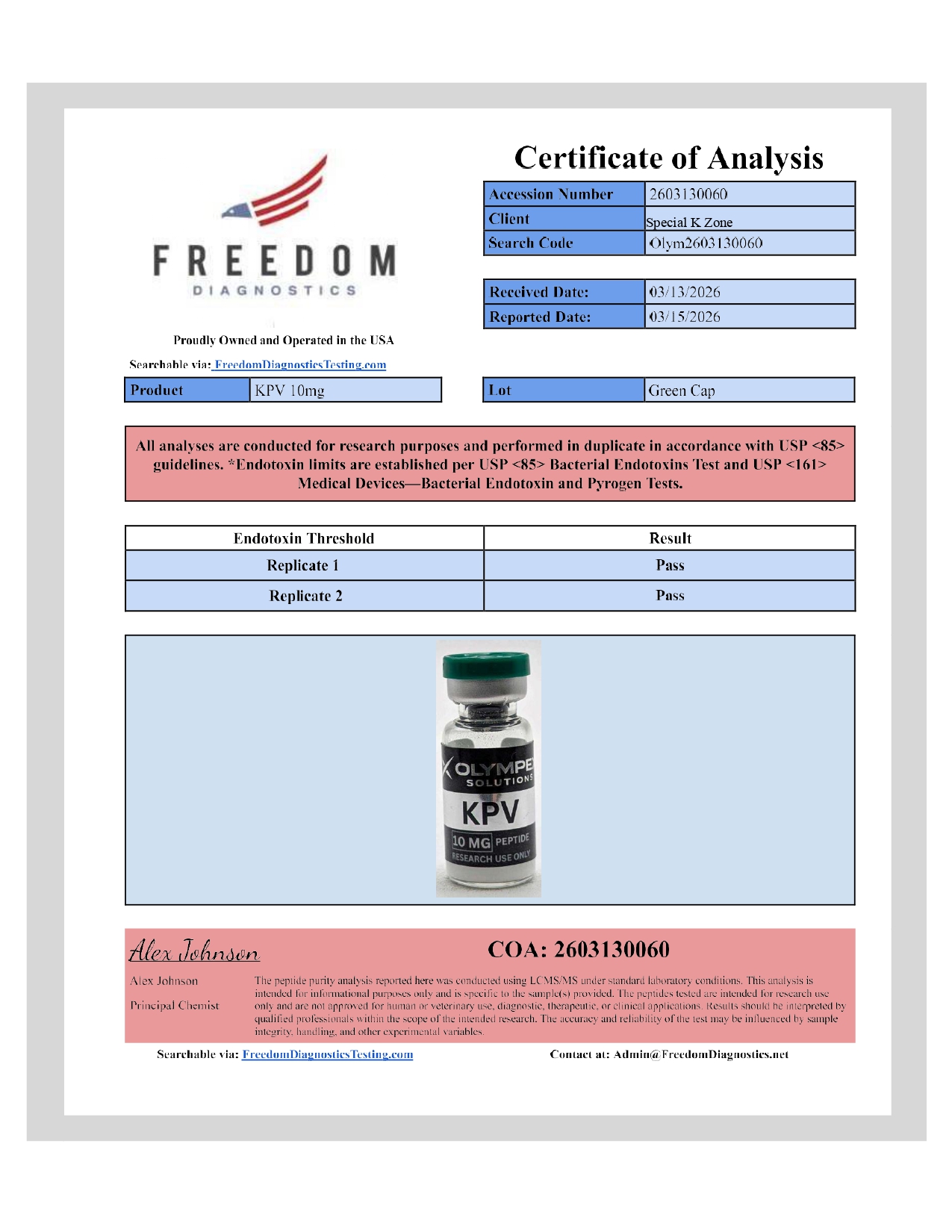
COA: Included in product image gallery
Reviews
There are no reviews yet.