Tesamorelin 10mg – Synthetic GHRH(1-44) for Metabolic & Visceral Adipose Research
Our pharmaceutical-grade Tesamorelin represents the gold standard in growth hormone-releasing hormone analog research, delivering the synthetic equivalent of human GHRH(1-44) specifically modified for enhanced stability and clinical efficacy. Unlike truncated analogs such as [CJC-1295 No DAC](https://specialkzone.com/product/cjc-no-dac-ipamorelin/) (Mod GRF 1-29) or the first-generation Sermorelin, Tesamorelin preserves the full 44-amino-acid sequence of native GHRH, incorporating an N-terminal trans-3-hexenoyl modification that confers resistance to enzymatic degradation while maintaining complete receptor activation. This structural integrity distinguishes it as the only FDA-approved GHRH analog (Egrifta®) for the reduction of excess abdominal fat in HIV-associated lipodystrophy, providing researchers with a clinically validated tool for investigating visceral adipose tissue (VAT) metabolism, hepatic steatosis, and the pathophysiology of central obesity.
The pharmacological significance of Tesamorelin extends beyond simple growth hormone stimulation; it specifically targets the deep visceral fat deposits associated with metabolic syndrome and insulin resistance, while sparing subcutaneous adipose tissue. This differential lipolytic profile makes it indispensable for research into ectopic fat deposition, non-alcoholic fatty liver disease (NAFLD), and the metabolic dysregulation characteristic of aging (somatopause). When reconstituted with [bacteriostatic water](#], this 10mg preparation enables investigation into whether restoring physiological GH pulsatility through full-sequence GHRH activation can reverse metabolic inflexibility, improve triglyceride profiles, and reduce cardiovascular risk markers independent of total body weight changes.
For metabolic disease researchers and endocrinology laboratories, Tesamorelin offers a bridge between pharmaceutical-grade clinical evidence and mechanistic research, allowing investigation into the specific contributions of visceral adiposity to insulin resistance, inflammation, and hepatic lipid metabolism—areas where truncated GHRH analogs or non-selective GH secretagogues may demonstrate inferior tissue specificity.
Mechanisms of Action & Visceral Adipose Specificity
Tesamorelin (trans-3-hexenoyl-GHRH(1-44)) functions as a potent, high-affinity agonist at the GHRH receptor (GHRHR) on anterior pituitary somatotrophs, activating the canonical Gsα/cAMP/protein kinase A (PKA) signaling cascade that stimulates GH gene transcription and secretion. The hexenoyl modification at the N-terminus protects against dipeptidyl peptidase-4 (DPP-4) cleavage, extending half-life compared to native GHRH while preserving the complete receptor-binding epitope necessary for full biological activity.
Differential Effects on Adipose Depots:
Unlike general weight loss interventions or continuous GH administration, Tesamorelin demonstrates preferential reduction of visceral adipose tissue (VAT)—the metabolically active fat surrounding internal organs—compared to subcutaneous adipose tissue (SAT). Research indicates that GH signaling in VAT stimulates hormone-sensitive lipase (HSL) and adipose triglyceride lipase (ATGL), promoting hydrolysis of stored triglycerides and release of free fatty acids for hepatic oxidation. The mechanism for this visceral specificity may involve higher GHRH receptor density in mesenteric and omental fat depots, differential sensitivity to GH-mediated lipolysis, or specific effects on preadipocyte differentiation in deep versus superficial fat compartments.
Hepatic Lipid Metabolism:
Beyond adipose tissue, Tesamorelin directly influences hepatic steatosis by reducing de novo lipogenesis and increasing fatty acid oxidation through GH-mediated upregulation of peroxisome proliferator-activated receptor alpha (PPARα). Clinical studies demonstrate significant reductions in liver fat content (measured by CT or MRI-PDFF) independent of systemic weight loss, positioning Tesamorelin as a research tool for NAFLD/NASH intervention where traditional lifestyle modifications fail.
Preservation of Pulsatility:
As a short-acting GHRH analog (half-life ~26 minutes), Tesamorelin preserves the natural ultradian rhythm of GH secretion (~10 pulses per day), maintaining GH receptor sensitivity in target tissues and avoiding the receptor downregulation and insulin resistance associated with continuous GH exposure. This pulsatile pattern stimulates IGF-1 production sufficient for metabolic benefits while minimizing the side effect profile of acromegaly or overt GH excess.
Research Applications & Therapeutic Models
HIV-Associated Lipodystrophy Syndrome (HALS):
The primary clinical and research application for Tesamorelin involves the metabolic complications of antiretroviral therapy, characterized by central fat accumulation (buffalo hump, visceral obesity), peripheral fat wasting, and dyslipidemia. Randomized controlled trials demonstrate that Tesamorelin reduces visceral adipose tissue by approximately 18% over 26 weeks, accompanied by improvements in triglycerides and cholesterol profiles without exacerbating insulin resistance—a critical advantage over growth hormone itself, which worsens glucose tolerance in this population. Research protocols examine optimal dosing (1-2mg daily), duration (12-52 weeks), and the durability of metabolic improvements post-treatment.
Metabolic Syndrome & Type 2 Diabetes:
For general metabolic syndrome research, Tesamorelin offers investigation into whether targeted VAT reduction can restore insulin sensitivity and reduce cardiovascular risk markers (CRP, IL-6, adiponectin) independent of caloric restriction. Studies focus on the “ectopic fat” hypothesis—removing lipid from liver and muscle through GH-stimulated lipolysis and oxidation to improve glucose disposal and reduce hepatic glucose output.
Non-Alcoholic Fatty Liver Disease (NAFLD):
With NAFLD reaching epidemic proportions, Tesamorelin research investigates pharmacological reduction of hepatic triglyceride content through GH-mediated stimulation of mitochondrial fatty acid oxidation and very-low-density lipoprotein (VLDL) export. Unlike [MOTS-c](#], which improves mitochondrial biogenesis, Tesamorelin enhances the hormonal drive to utilize existing mitochondrial capacity for lipid oxidation.
Aging & Somatopause:
Age-related GH decline (somatopause) correlates with increased visceral adiposity, sarcopenia, and metabolic inflexibility. Tesamorelin research examines whether restoring youthful GH pulsatility specifically targeting VAT can improve body composition, physical function, and metabolic health in older adults without the risks of continuous GH administration. Studies compare Tesamorelin to [CJC-1295 No DAC](https://specialkzone.com/product/cjc-no-dac-ipamorelin/) and other secretagogues for efficacy in age-related metabolic decline.
Product Specifications & Molecular Characteristics
- Chemical Name: Tesamorelin; trans-3-hexenoyl-human GHRH(1-44)
- Sequence: trans-3-hexenoyl-Tyr-Ala-Asp-Ala-Ile-Phe-Thr-Asn-Ser-Tyr-Arg-Lys-Val-Leu-Gly-Gln-Leu-Ser-Ala-Arg-Lys-Leu-Leu-Gln-Asp-Ile-Met-Ser-Arg-Gln-Gln-Gly-Glu-Ser-Asn-Gln-Glu-Arg-Gly-Ala-Arg-Ala-Arg-Leu-NH₂ (GHRH 1-44 with N-terminal modification)
- Molecular Formula: C₂₂₁H₃₆₈N₇₂O₆₇S (approximate, depends on exact salt/counter-ion)
- Molecular Weight: ~3,746 g/mol (varies by formulation)
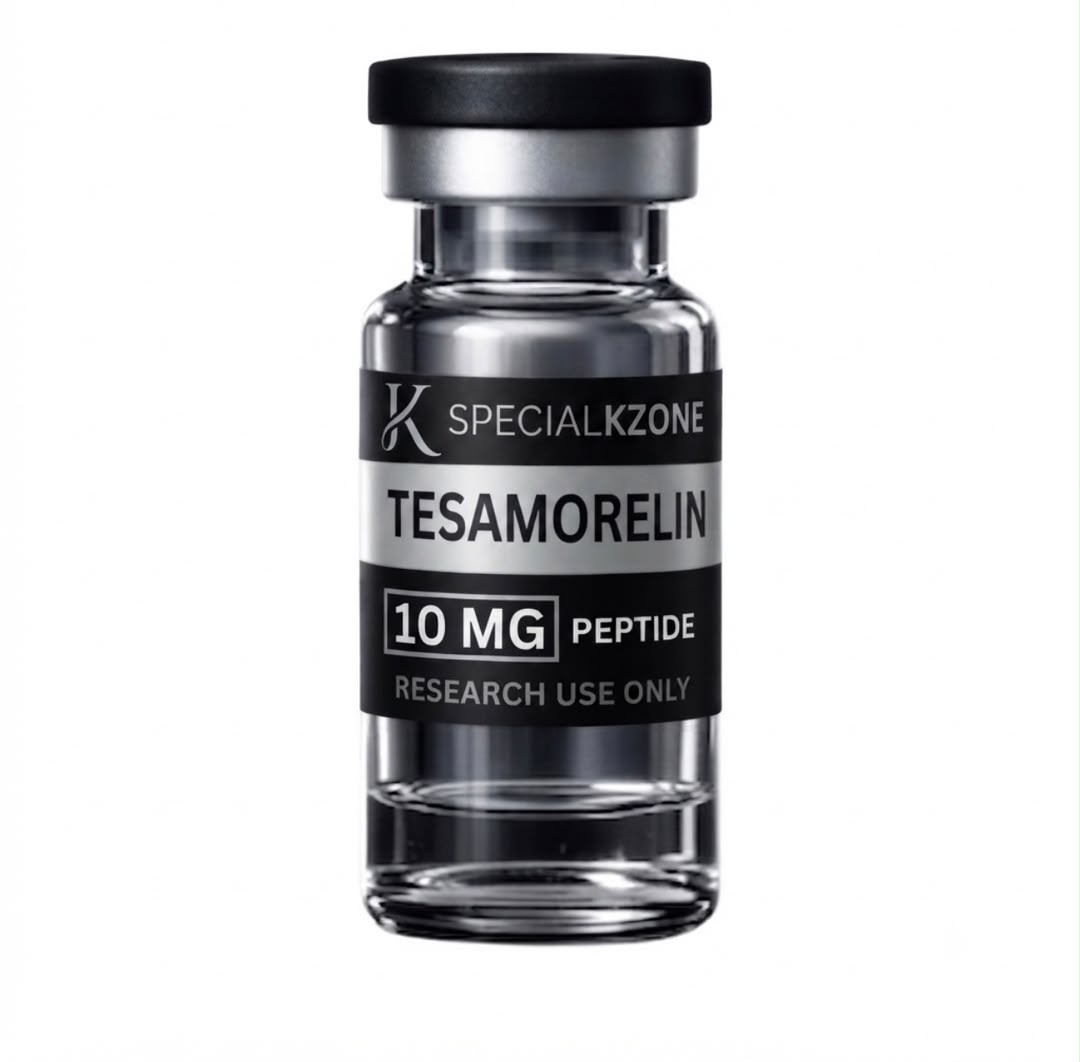
- Total Content: 10mg per vial (lyophilized powder, typically acetate or trifluoroacetate salt)
- Structure: Linear 44-amino-acid peptide with trans-3-hexenoyl N-terminal modification
- Mechanism: GHRH receptor agonist (full sequence)
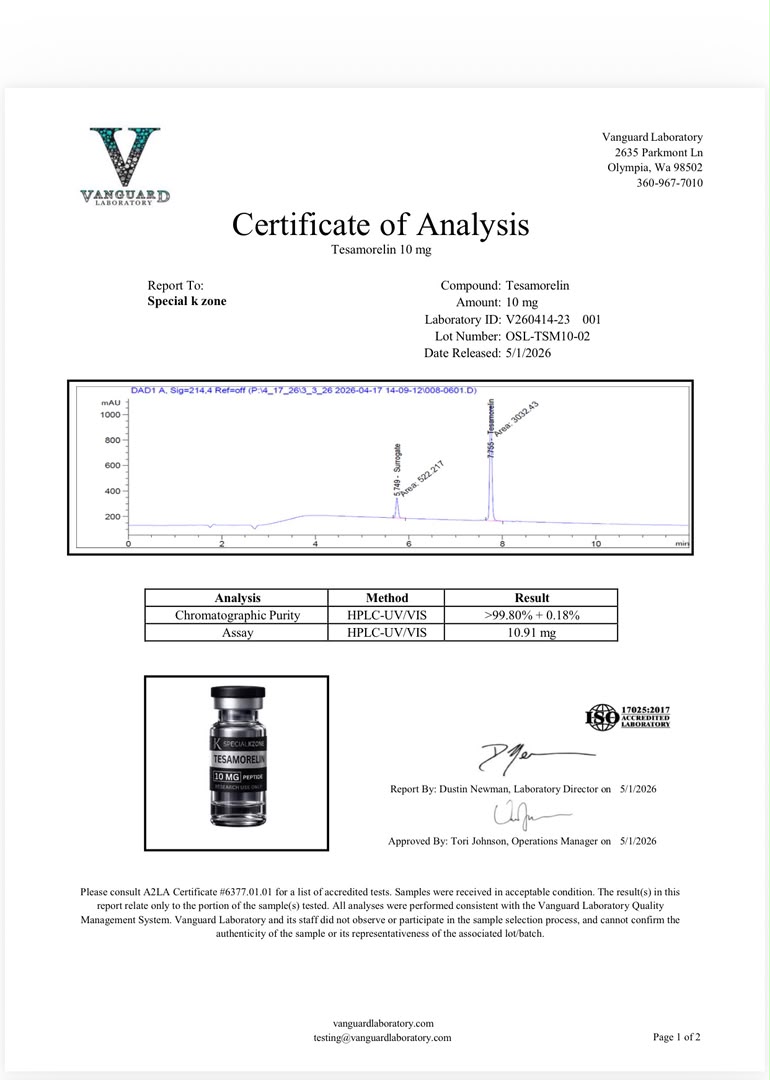
- Purity: ≥98% (HPLC verified)
- Appearance: White to off-white fluffy lyophilized powder
- Solubility: Soluble in aqueous buffers; may require gentle agitation due to hydrophobic regions
- Storage: -20°C stable (lyophilized), protect from light and moisture
- Reconstituted Stability: 7-14 days at 2-8°C when prepared with appropriate preservatives
Quality Verification:
Each batch analyzed via mass spectrometry for correct molecular weight (~3746 Da) and verification of the hexenoyl modification. Purity confirmed through reverse-phase HPLC. Bioactivity verified through GH release assays in rat pituitary cell cultures or GHRH receptor binding assays.
Reconstitution & Research Protocols
Preparation Guidelines:
Reconstitute Tesamorelin 10mg with 2-5ml of [bacteriostatic water](#] to create a 2-5mg/ml stock solution. Due to the peptide’s larger size (44 amino acids) and hydrophobic regions, gentle swirling for 2-3 minutes may be necessary for complete dissolution; avoid vigorous vortexing which may cause aggregation. The solution should be clear to slightly opalescent; cloudiness indicates pH incompatibility or aggregation. Store reconstituted solution at 2-8°C and use within 7-14 days.
Dosing Strategy:
Research protocols typically employ 1-2mg daily via subcutaneous injection, administered in the evening to coincide with the natural nocturnal GH peak, or divided into morning and evening doses for sustained stimulation. Clinical trials for HIV lipodystrophy utilized 2mg daily; research models may adjust based on species and endpoint (body composition vs. acute GH stimulation).
Route of Administration:
Subcutaneous injection into abdominal fat (ironic given the target) or thigh provides reliable absorption. Unlike smaller peptides such as [DSIP Spray](#], intranasal delivery is ineffective for Tesamorelin due to molecular size and susceptibility to enzymatic degradation in nasal mucosa.
Cycle Duration:
Clinical studies typically employ 12-26 week cycles to assess VAT changes. Research should monitor IGF-1 levels, fasting glucose, triglycerides, and visceral adipose tissue (via CT or bioimpedance) at baseline and cycle completion.
Combination Research:
While effective as monotherapy, Tesamorelin is often combined with Ipamorelin (Tesa-Ipa Blend to investigate whether GH secretagogue synergy can overcome partial GHRH resistance in metabolic syndrome or aging models.
Comparative Analysis: Tesamorelin vs. Alternative Interventions
Tesamorelin vs. CJC-1295 No DAC (Mod GRF 1-29):
[CJC-1295 No DAC](https://specialkzone.com/product/cjc-no-dac-ipamorelin/) contains only the first 29 amino acids of GHRH with D-Ala² substitution for DPP-4 resistance. While cost-effective and widely used, it lacks the C-terminal residues (30-44) present in Tesamorelin that may contribute to full receptor activation and specific metabolic effects. Tesamorelin offers clinical validation (FDA approval) and specific visceral adipose targeting that truncated analogs may not replicate. However, CJC-1295’s shorter sequence allows for easier synthesis and modification (e.g., DAC addition for extended half-life).
Tesamorelin vs. Sermorelin:
Sermorelin (GHRH 1-29) represents the first-generation GHRH analog. Tesamorelin offers superior stability (hexenoyl modification vs. unmodified Sermorelin) and potentially greater potency due to the full 44-amino-acid sequence, though both stimulate GH release effectively.
Tesamorelin vs. Ipamorelin:
[Ipamorelin](#] is a ghrelin mimetic (GHRP) acting through GHS-R1a, distinct from the GHRH receptor targeted by Tesamorelin. While both increase GH, Ipamorelin suppresses somatostatin and creates a different pulse pattern. The [Tesa-Ipa Blend](#] exploits synergistic amplification, but Tesamorelin alone offers the specific metabolic profile validated in clinical lipodystrophy trials.
Tesamorelin vs. MOTS-c:
Both address metabolic syndrome but through fundamentally different mechanisms. [MOTS-c](#] is a mitochondrial-derived signaling peptide improving cellular insulin sensitivity and biogenesis. Tesamorelin is an endocrine hormone stimulating GH release to reduce visceral fat mass. Research compares endocrine versus intracellular metabolic strategies, with combination protocols potentially addressing both hormonal drive and cellular execution of lipid metabolism.
Safety Considerations & Research Limitations
Glucose Homeostasis:
As with all GH-stimulating compounds, Tesamorelin can induce transient insulin resistance and hyperglycemia through GH’s anti-insulin effects (increased hepatic glucose output, decreased peripheral glucose uptake). Research protocols must monitor fasting glucose and HbA1c, particularly in models with pre-existing diabetes or metabolic syndrome. Paradoxically, long-term VAT reduction may improve insulin sensitivity despite acute GH effects.
Fluid Retention:
GH stimulation increases extracellular fluid volume through sodium retention and increased capillary permeability. Research should distinguish between true fat loss and water weight changes using body composition analysis (DEXA, MRI) rather than scale weight alone.
Injection Site Reactions:
Erythema, pruritus, or lipohypertrophy may occur at injection sites with chronic administration. Rotation of injection sites and sterile technique minimize these effects.
Cost and Complexity:
As a 44-amino-acid peptide with specific modifications, Tesamorelin synthesis is more complex and costly than smaller GHRH fragments or GHRPs. Research budgets should account for the higher per-dose cost compared to [CJC-1295 No DAC](https://specialkzone.com/product/cjc-no-dac-ipamorelin/).
Frequently Asked Research Questions
How does Tesamorelin differ from CJC-1295?
Tesamorelin is the full GHRH(1-44) analog with N-terminal hexenoyl modification, FDA-approved for HIV lipodystrophy. [CJC-1295 No DAC](https://specialkzone.com/product/cjc-no-dac-ipamorelin/) is a truncated 29-amino acid analog. Tesamorelin may offer superior visceral fat reduction and metabolic effects due to complete receptor engagement.
Does it build muscle or just burn fat?
While primarily researched for VAT reduction, the elevated GH and IGF-1 stimulate protein synthesis and nitrogen retention, supporting lean mass preservation or modest gains, particularly in GH-deficient models. However, it is not primarily an anabolic agent like [IGF-1 LR3](#].
How long until visceral fat changes are visible?
Clinical studies show significant VAT reduction by 12 weeks, with continued improvement at 26 weeks. Research protocols should plan for 3-6 month assessments to capture meaningful body composition changes.
Can it be used with Ipamorelin?
Yes, combining Tesamorelin (GHRH analog) with [Ipamorelin](#] (GHRP) produces synergistic GH release, often preferred for research requiring maximal GH stimulation. The [Tesa-Ipa Blend](#] offers this combination pre-formulated.
Is it detectable in anti-doping tests?
Tesamorelin stimulates endogenous GH production, so direct detection is difficult. However, elevated IGF-1 and altered GH pulse patterns may be detectable through biomarker profiling. It is prohibited by WADA as a GH secretagogue.
Tesamorlin is a research compound in lyophilized powder form for laboratory research, testing, and analytical applications.
-
Compound: Tesamorlin
-
Quantity: 10 mg
-
Purity: ≥99% (HPLC Certified)
-
Form: Lyophilized powder
-
Appearance: White to off-white powder
-
Solubility: Soluble in laboratory-grade sterile water
-
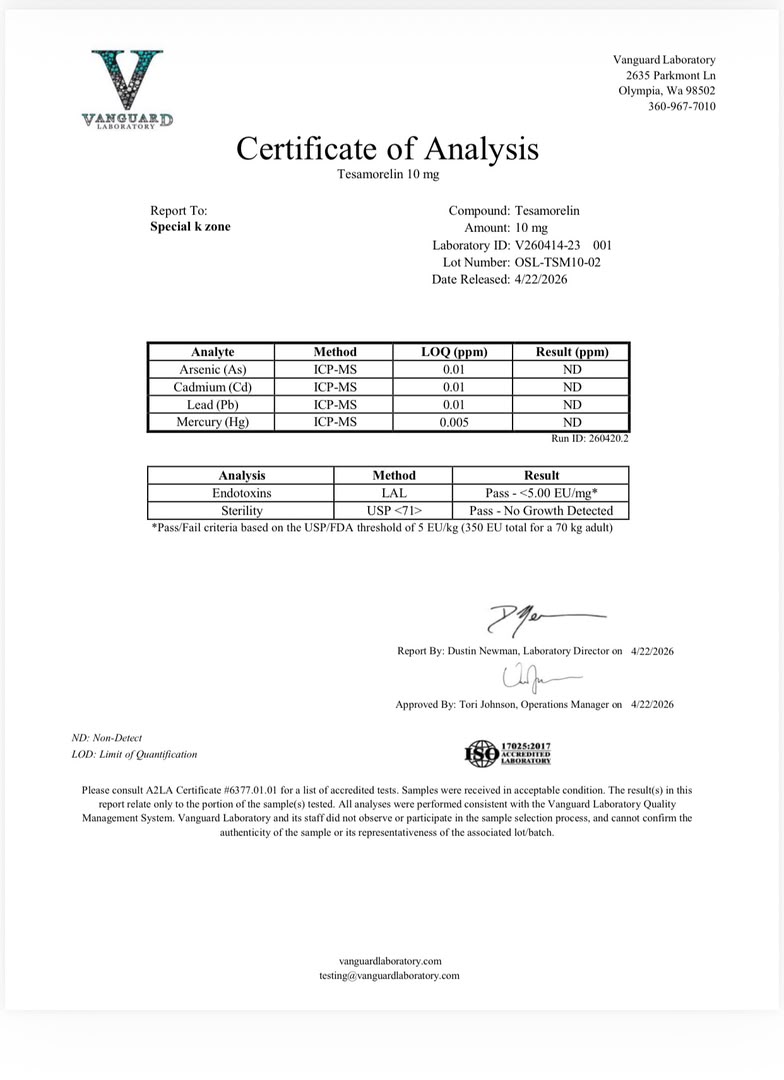
COA: Included in product image gallery
Reviews
There are no reviews yet.